The Rituals of Healing

Do you notice the rituals of healing in the same way as you notice the rituals of religion? It is interesting to think that rituals play a large role in the healthcare system, and perhaps in our ultimate healing. What do you consider the rituals of healthcare? Perhaps the white coat and stethoscope? The physical exam?  Receiving of a prescription for a medicine?  I have been reflecting on what we consider rituals related to the healing process as I have read and watched some interesting remarks on this subject from two leading sources on this topic.

Dr. Ted Kaptchuk, the director of Harvard's Program in Placebo Studies and Therapeutic Encounters, was recently interviewed in the New Yorker magazine about his quest to understand the placebo effect and how it influences quantifiable measures of health.  Could our belief about whether a treatment is effective or our level of trust in routine rituals of healthcare, such as placing a stethoscope on the chest, physiologically change our ability to heal? 

Dr. Abraham Verghese, author and physician, ponders whether we, as a society, are in danger of losing the art of medicine as we have increased access to technology to support the science of medicine. In his recent TED talk,  Dr. Verghese argues that while it is important to have modern tools of medicine, which are enabled by science and technology, the art of medicine is essential as well.  For it is the art of medicine that allows for the human connection between patient and healer to emerge and the rituals of healing to be sustained.

What are your thoughts?

Wisdom Where You Least Expect It

I don't know about you, but I am beginning to feel myself being pushed, jostled and dragged along with the frenzied masses this holiday season.  Try as I might to step back, take a breath and be mindful, I am amazed at the cacophony of  "shoulds" and "to-do's" that seem to continuously play in my mind at this time of year.

So there I was today, at the post office, picking up mailing boxes for the presents that "should" have gone out on Monday but were still sitting in my car on Friday, when I reached into the pocket of my coat to pull out my car keys and noticed the keys were caught on a sewn-in tag in the pocket.  The coat is not a new,  it is one that I have worn each winter for the past two years, so I was surprised to find that there was a tag in this pocket, and even more surprised to look down and read the words on the tag...


Hmm, simple and direct words of wisdom, and all I really need to remember on this journey we call life..."Stay Warm. Keep Dry."  I smiled for the rest of the day at the wisdom that has quietly resided in my pocket for two years without me noticing...a wonderful reminder for me to be open to finding gifts where I least expect them, even in familiar places.

Season of Kindness

With the uber excess of the holiday season, it is easy to forget the gift that we each already possess, is renewable and transferable, doesn't need to be wrapped, always fits and doesn't cost a dime...the gift of kindness and compassion.  In the Buddhist tradition, this quality of loving kindness or compassion is called metta and is meant to be cultivated and nurtured both in ourselves and extended outward to include all living beings in the world. Self compassion is often the most difficult to nurture, but essential to be able to acknowledge and share your metta with the others.  During this season of giving, why not  save yourself a trip to the mall and consider giving the gift of kindness, compassion and presence?

Kindness
by Naomi Shahib Nye 

Before you know what kindness really is
you must lose things,
feel the future dissolve in a moment
like salt in a weakened broth.
What you held in your hand,
what you counted and carefully saved,
all this must go so you know
how desolate the landscape can be
between the regions of kindness.
How you ride and ride
thinking the bus will never stop,
the passengers eating maize and chicken
will stare out the window forever.

Before you learn the tender gravity of kindness,
you must travel where the Indian in a white poncho
lies dead by the side of the road.
You must see how this could be you,
how he too was someone
who journeyed through the night with plans
and the simple breath that kept him alive.

Before you know kindness as the deepest thing inside,
you must know sorrow as the other deepest thing. 
You must wake up with sorrow.
You must speak to it till your voice
catches the thread of all sorrows
and you see the size of the cloth.

Then it is only kindness that makes sense anymore,
only kindness that ties your shoes
and sends you out into the day to mail letters and 

purchase bread,
only kindness that raises its head
from the crowd of the world to say
it is I you have been looking for,
and then goes with you every where
like a shadow or a friend.

Engage with Grace this Thanksgiving

For the past few years I have joined in the annual Thanksgiving blog rally, Engage with Grace: One Slide Project. This year, however, Engage with Grace holds special meaning and remembrance for me.  

On November 21, our community of Concord, Massachusetts lost an incredible teacher and mentor, David Prifti.  David, a gifted artist who taught photography at Concord-Carlisle High School, had the unique quality of connecting with each student to make them feel like they were the most amazing, talented kid in the world.  But more than that, David taught his students how to navigate life with grace, dignity, hope and humor.  

During the past two and a half years, as David lived with the diagnosis of pancreatic cancer, he allowed us all to become his students as he shared his journey through his widely read blog, Prifti News. Last month he shared with his blog readers his decision to enter hospice care and determine as best he could that the end of his life would be filled with the same beauty, grace and gentleness that had always been central to his life. One of the many gifts that David left with us is the recognition of the importance of communicating with others, expressing our wishes for the end of life.  

And so, this Thanksgiving, I dedicate my participation in Engage with Grace to David Prifti, in gratitude for teaching us all the meaning of grace, hope and peace.  

May your Thanksgiving be filled with mindful moments and shared conversations with those you love.
Pam


Engage with Grace 2011: Occupy With Grace

Once again, this Thanksgiving we are grateful to all the people who keep this mission alive day after day: to ensure that each and every one of us understands, communicates, and has honored their end of life wishes.

Seems almost more fitting than usual this year – the year of making change happen. 2011 gave us the Arab Spring – people on the ground using social media to organize a real political revolution. And now – love it or hate it – it’s the Occupy Wall Street movement that’s got people talking.

Smart people (like our good friend Susannah Fox) have made the point that unlike those political and economic movements, our mission isn’t an issue we need to raise our fists about…it’s an issue we have the luxury of being able to hold hands about.
It’s a mission that’s driven by all the personal stories we’ve heard of people who’ve seen their loved ones suffer unnecessarily at the end of their lives.
It’s driven by that ripping-off-the-band-aid feeling of relief you get when you’ve finally broached the subject of end of life wishes with your family, free from the burden of just not knowing what they’d want for themselves, and knowing you could advocate for these wishes if your loved one weren’t able to speak up for themselves.
And it’s driven by knowing that this is a conversation that needs to happen early, and often. One of the greatest gifts you can give the ones you love is making sure you’re all on the same page. In the words of the amazing Atul Gawande – you only die once! Die the way you want. Make sure your loved ones get that same gift. And there is a way to engage in this topic with grace…

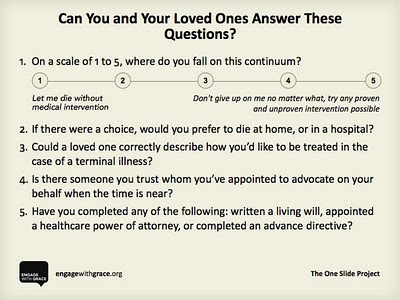
Here are the five questions – read them, consider them, answer them (you can securely save your answers the Engage with Grace site, www.engagewithgrace.org), share your answers with your loved ones. It doesn’t matter what your answers are, it just matters that you know them for yourself, and for your loved ones. And they for you.

We all know the power of a group that decides to assemble. In fact, we recently spent an amazing couple days with the members of the Coalition to Transform Advanced Care -- or C-TAC – working together to channel so much of the extraordinary work that organizations are already doing to improve the quality of care for our country’s sickest and most vulnerable.

Noted journalist Eleanor Clift gave an amazing talk – finding a way to weave humor and joy into her telling of the story she shared in this Health Affairs article. She elegantly sums up (as only she can) the reason that we have this blog rally ever y year:
For too many physicians, that conversation is hard to have, and families, too, are reluctant to initiate a discussion about what Mom or Dad might want until they’re in a crisis, which isn’t the best time to make these kinds of decisions. Ideally, that conversation should begin at the kitchen table with family members, rather than in a doctor’s office.”
It’s a conversation you need to have wherever and whenever you can – and the more people you can rope into it, the better!! Make this conversation a part of your Thanksgiving weekend – there will be a right moment – you just might not realize how right it was until you begin the conversation.

This is a time to be inspired, informed…to tackle our challenges in real, substantive, and scalable ways. Participating in this blog rally is just one small – yet huge – way that we can each keep that fire burning in our bellies, long after the turkey dinner is gone.

Wishing you and yours a happy and healthy holiday season. Let’s Engage with Grace together.

Choosing to Keep the Heart Open

Grief is universal.  As human beings we are fortunate that we can feel the emotion of love so strongly, but tightly bound to this intense love is the incredible grief we feel when one we love dies.  Some of you may know that my son, Nick, died of a rare form of cancer in 2001 when he was just 14 years old.  I was both humbled and honored when I was recently asked to deliver a speech at the 20th annual Pediatric Memorial Service at Massachusetts General Hospital to honor the children who had died and the parents, siblings, relatives, friends, and healthcare providers who they left behind.  A large part of my professional life is spent as a public speaker, so I am comfortable expressing myself before a large audience.  However, as you can imagine, this speech didn't come easily to me. As I worked on what I wanted to say to the audience gathered at Massachusetts General Hospital, it became clear that perhaps these words needed to travel further, so I am posting them here, in my blog, in hopes that someone who may find comfort in them will find them here.  It is with compassion, peace and hope that I offer these words to each of you ~ Pam
  
Sunday, November 6, 2011 ~ Massachusetts General Hospital, Boston, MA

"The only whole heart is a broken one...it lets the light in" ~Rabbi David Wolpe

There are few choices afforded to us in how to survive the loss of a child.  Well meaning friends, relatives and professionals may advise us "not to let this tragedy define who we are", but I will have to respectfully disagree with this advice.  The tragedy of losing a child is a life changing event like no other: We are confronted with not only the loss of one we deeply love, but with the loss of our future as we had envisioned.  We are shaken to the very core of our existence and essence. Yes, this event will define us for the rest of our lives whether we want it to or not.

When our loss is new, it is unfamiliar and terrifying in its intensity.  I vividly remember waking up the morning after Nick died and being absolutely amazed and incredulous that the sun had the audacity to rise, that the school bus continued on its scheduled route down my street, that  people went to the grocery store, commuted to work and  that the mail was delivered...the outside world continued to function as if nothing had occurred.  It was a surreal scene.  Because for me it was as if a nuclear bomb had been detonated.  The world as I had known it had been destroyed with the death of my son.  My world now was defined as a new normal even though I wished desperately for the old normal to return. 

Rabbi and author, David Wolpe, aptly describes the feeling of new loss in this way  "When we experience a loss, a hole opens up inside of us. It is almost as if the loss itself plows right through us, leaving us gasping for air" and we bleed profusely through this opening. During the early days, months and years after our loss, we focus on how to slow down this  hemorrhage, this continuous emptying of grief.  But then something begins to change, very, very slowly; the immediate agony subsides. Around the edges of that opening, things begin to heal and scar tissue begins to form.  This is the point at which we can choose how the tragedy of our loss will continue to define our lives...we can choose  to allow the scar tissue to continue to form and thicken, closing the hole within us -- hardening us to the world with the unfairness and unjustness of our loss; or we can choose to allow the hole to remain open, allowing not only the stream of grief to flow out but permitting light, hope and meaning to enter.  I have chosen to allow the hole within me to remain open and this is one of the gifts my son has given me. 

Rabbi Wolpe suggests that "The only whole heart is a broken one, it lets the light shine in."  Allowing the hole to remain open, has allowed me to be a more compassionate person to others and myself, perhaps a bit less judgmental and more empathetic than I was in my old normal.  Keeping the hole open has made it easier for me to prioritize what really matters and not what I think should matter -- it now OK to say no to mundane tasks and yes to things that feed my soul.  I do not fear many things now -- after all the worst has happened to me, so what do I have to be fearful of now?  And most important, by keeping the hole open, continuing to allow the grief out and the light in, I am able to hold Nick and the meaning of his life close.  

So, perhaps I have what the professionals call a "maladaptive coping strategy", but I embrace the notion that yes, I have let this tragedy define me in a way I never imaged would be possible; by allowing my heart to remain broken, and open, it is, in my new normal, whole once more.

I wish each of you peace, hope, and healing on your journeys.

The Familiar Becomes the Unfamiliar and the Unfamiliar Becomes the Familiar

We have been closing up the family cottage for the winter this week.  The familiar now somehow unfamiliar or perhaps is it the unfamiliar now somehow familiar?  The sounds of summer have receded; replaced by the sounds of autumn; the sounds of silence.  But it is more than sounds that make the familiar unfamiliar...it is all the senses converging that creates this new place within the familiar space.  The lake now quiet and smooth as glass, pine cones dropping from tall pines nudged off their branches by industrious squirrels, leaves turning to crimson and gold and fluttering downward on the breeze, the air somehow different.  Perhaps it is the pungent scent of mulching leaves, the mist that remains on the surface of the lake late into the morning, the blackness of the earth, or the hint of smoke from a fireplace that reminds me that nothing remains the same, that we are always in flux...even in the most familiar of surroundings.  Season to season, year to year, the familiar becomes the unfamiliar and the unfamiliar becomes the familiar.

Remembering September 11: Reflections on Hope, Renewal, and Resilience

Those who will not slip beneath 
the still surface of the well of grief
turning downward through its black water
to the place we cannot breathe
will never know the source from which we drink,
the secret water, cold and clear, nor find in the darkness glimmering
the small round coins
thrown away by those who wished for something else.
~By David Whyte from Close to Home
 WTC 9 11

Do you remember when September 11 was just another day on the calendar? "September 11", or simply "9-11", has become a universally recognized phrase meaning a moment when, collectively, our lives in the United States changed forever. As the 10th anniversary of September 11, 2001 approaches, we are reminded of the cataclysmic events of that day, and the utter astonishment and disbelief that something like this could happen to "us".  While this was a collective moment, each of us individually will have our own private, personal "9-11's" in our lives.  Perhaps our personal 9-11's will come as a dreaded diagnosis, a late night phone call, an accident, a devastating natural disaster, an unspeakable hurt or loss. There will be no journalists covering our 9-11's, no awards for heroism, nor museums built, but that doesn't make our personal 9-11's any less devastating or life-altering. While we cannot prepare for what our personal 9-11's will look like, we can find ways to build resiliency; first by acknowledging the grief and loss that occurs when our life is knocked off its axis and then by diving deep to find ways to cope, make meaning, find purpose, and renewed hope in our "new normal".  I have been touched by reading some of the stories of resiliency this week, stories of those who have used these past ten years to rebuild lives in ways that look very different than the lives planned and imagined prior to September 11, 2001. This is the work of renewal, resiliency, and hope; to find something glimmering in the darkness, as David Whyte suggests in "The Well of Grief".  We cannot control the outcome of an event, a 9-11 in our lives, but we can control the experience by creating a renewed sense of purpose, meaning and hope in our lives as we adapt to our new normal.  

In Praise of the August Tomato

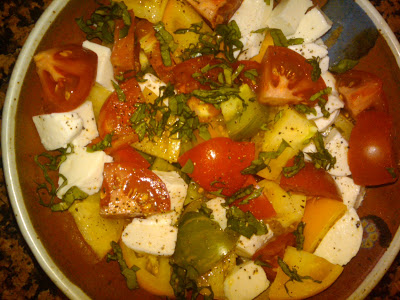
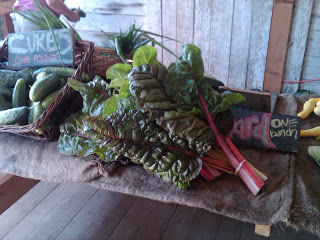
Hallelujah! Tomatoes...red, yellow and green zebra...my weekly pickup at First Root Farm, our local CSA (community supported agriculture) farm in Concord, MA, yielded a rainbow of August tomatoes today. This has been a hard year for our finicky tomato friends, too cold, too hot, too wet, too dry, falling victim to fungi and hornworms; so these August jewels seemed even more precious as I carried them home.  Each year I am reminded that freshly picked August tomatoes, still warm from the sun, taste like nothing else in the world.  I sliced the tomatoes, tossed them gently with fresh mozzarella, basil, olive oil and a touch of freshly ground black pepper. The epitome of a mindful moment; all five senses heightened.  I am again reminded that life is delicious.

Mindful Moments

"Two roads diverged in a wood, and I -- I took the one less traveled by, and that has made all the difference."  ~Robert Frost

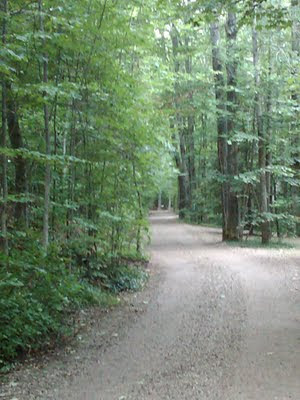
What road did you travel this summer? Did you make time to diverge from the usual to find the extraordinary in the ordinary? Mindfulness is about stepping off the well traveled road every once in a while to notice life as it unfolds in the present moment and not in the rearview mirror.  I am grateful for these moments, which cannot be planned or anticipated but simply appear when one slows down to the speed of life. 

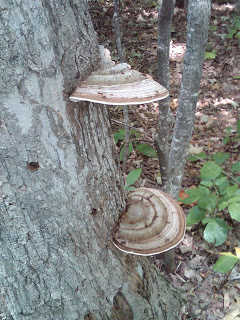
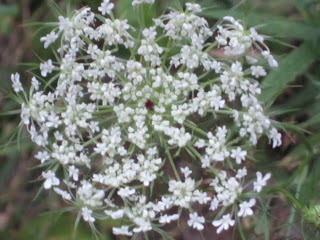
A few glimpses of my summer mindful moments are represented in the pictures below. I invite each of you to share reflections of your summer mindful moments, moments when the ordinary became the extraordinary, through photos, poems, or prose with my blogging community.  Please email me your submissions and I will share them in future blog posts.

Lake Michigan Sunset

Treating Chronic Pain as a Disease and Not a Symptom

Viewing chronic pain as a disease and not a symptom of some underlying condition is a notion that is gaining traction in the medical field.  Melanie Thernstrom, a chronic pain sufferer and journalist has written a wonderful book: The Pain Chronicles, which highlights the experience and complexity of living with chronic pain.  Read more about chronic pain as a disease and not a symptom in this recent New York Times article: Giving Chronic Pain a Medical Platform of Its Own by Tara Parker-Pope

More Good News About Meditation

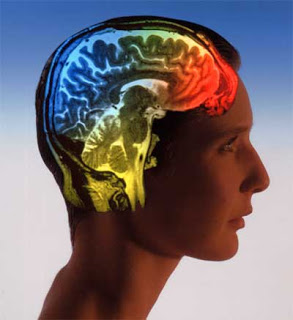
The news about meditation just keeps getting better!  In a recent study by UCLA neuroimaging researchers suggest that people who meditate have stronger connections between brain regions and show less age-related brain atrophy. The benefit of having stronger brain connections is the rapid relay of the electrical signals in the brain which typically decreases with age.

Eileen Luders, a visiting assistant professor at the UCLA Laboratory of Neuro Imaging, led a team of investigators in the study using a new type of brain imaging (DTI) which provides insight into the structural connectivity of the brain. The study found that the differences between the meditators and the control group were not only in one area of the brain but involved networks that include most regions of the brain, and structures such as the limbic system and brain stem.
"Our results suggest that long-term meditators have white-matter fibers that are either more numerous, more dense or more insulated throughout the brain," Luders said. "We also found that the normal age-related decline of white-matter tissue is considerably reduced in active meditation practitioners."

To read more about this study, click here for the UCLA press release

Mindfulness in the Form of Peas

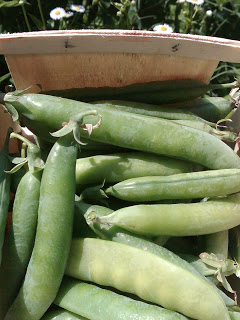
Mindfulness comes in many forms and for me, today, it came in the form of peas. Let me explain. This is the first year that my family and I have been involved in a CSA, or Community Supported Agriculture, thanks to our friends Cindy and Jim. I am not and have never been a vegetable gardener; the produce aisle at my local grocery and an occasional farmer's market have always been fine with me. So, I was a bit concerned that our foray into weekly vegetable pickups from the CSA would be just another thing to add to an already very full to-do list; but I was mistaken.

My weekly pickups have instilled more mindfulness in my Thursdays. I don't know what types of veggies we will be having for dinner until I actually pick them up. Without the pre-planning and future thinking of making lists of specific ingredients for an intended recipe, I have become accustomed to the surprise of picking up whatever has been harvested that day and enjoying the adventure of the present moment by combining often disparate ingredients into something simple but often delicious.
I have become mindful of the complex flavors of the multiple varieties of greens, have experienced the curiously intense flavor of freshly harvested fennel, and gained a new appreciation for the labor involved in picking and shelling enough peas to feed a family. Today as I ventured out to pick some fresh peas off the vines at First Root Farm, I recognized this new form of summer mindfulness meditation in my life; stopping in the middle of a busy day with many pressing deadlines and simply choosing and picking ripe, plump peas for the dinner table; no way to hurry up the process, just simply going with the rhythm of nature with a curious and open mind. I am not sure what next week's bounty will be, but these peas look incredible in this moment.

Commencement ~ The Journey Continues

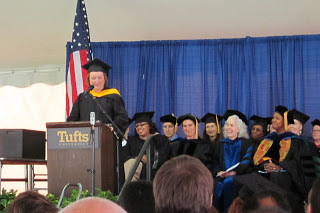
Last Sunday marked a milestone in my life.  Thirty-two years after my first university commencement, I again crossed the stage; this time collecting a diploma in recognition of my graduate work at the Tufts University School of Medicine's Pain Research, Education and Policy Program. Perhaps because of the years that have passed since I set out in 1979, this commencement was very poignant for me, filling me with gratitude for all those who have guided,  mentored, and walked beside me over the years; my family, friends, patients, clients, students, teachers, colleagues, neighbors and fellow life travelers.

I was honored to be selected to deliver the commencement address for my program, and I share it here with you, my readers.  I welcome your thoughts and comments on your journey.

May 22, 2011
Tufts University School of Medicine 
Pain Research, Education & Policy Program Commencement Address
by Pamela Katz Ressler, M.S., R.N., HN-BC
To the faculty, administration, fellow graduates, and especially to my wonderful family; I am both incredibly honored and extremely humbled to stand before you today. It has been 32 years since I last wore a cap and gown and I am reminded today of that spring day so long ago in Ann Arbor, Michigan. In 1979, the adventure on which I was embarking appeared so clear and direct, much like Homer’s Odysseus as he set off from Troy enroute to Ithaca. But as with Odysseus, we often find our journeys far more complicated than we ever anticipated…meeting not only with trade winds and gentle seas but also with violent storms and towering waves that can batter us and throw us off course. And so it is for the patients we meet each day in healthcare. They, too, are voyagers on their own Homeric journeys, each filled with unique, authentic stories waiting to be told. It is up to us, in healthcare, to elicit, acknowledge, and honor these stories, to bear witness to their individual journeys and to help them navigate through difficult passages. When we first enter the world of healthcare our mission seems clear and direct – we want to quickly fix what we see as broken, to cure what we see as diseased. While this is a noble mindset, we often miss the opportunity to heal when we blindly set out in this direction. What I have learned is that often we cannot cure, no matter how desperately we try, but the potential for healing is always possible. This statement may seem incongruous to what we see as the measurement of medical success. But, as we look broadly at what healing really is… isn’t it all about reducing pain and suffering…about living and dying with dignity, grace, and a sense of purpose? We meet our patients at many points on their journeys and I see our work as assisting them in gathering the necessary tools of healing to find safe passage on their voyages.


During the course of my studies here at Tufts I have discovered many tools of healing. The Pain Research Education and Policy program was not on my navigational charts when I set off in 1979, but I am so grateful that I found my way here. Through my work with inspirational faculty mentors, especially Dr. Bradshaw, Dr. Glickman-Simon and Dr. Carr, as well as Dr. Gualtieri in the Health Communications program, I have explored pain not only as a physical manifestation of injury or disease, but also as a complex pattern of psychosocial and cultural components that contribute to a sense of suffering. Addressing the suffering has a direct impact on reducing the sensation of pain. The Pain Research, Education and Policy Program has allowed me to explore the intersection of modern medicine, technology, ancient healing practices of the body and mind and spirit, and the innate human desire to survive adversity. It has given me a voice in advocacy and scholarship by helping me to articulate the meaning of pain and suffering for individuals and society. For this I will always be grateful. Some of you may be familiar with the poem, Ithaca, by Constantine Covafy. It is a poem that has kept me company on my journey and I would like to offer it to you as a metaphor for this commencement, as each of us sets forth on new journeys and adventures:

When you set out on your journey to Ithaca,
pray that the road is long,
full of adventure, full of knowledge.

The Lestrygonians and the Cyclops,
the angry Poseidon -- do not fear them:
You will never find such as these on your path,
if your thoughts remain lofty, if a fine
emotion touches your spirit and your body.

The Lestrygonians and the Cyclops,
the fierce Poseidon you will never encounter,
if you do not carry them within your soul,
if your soul does not set them up before you.

Pray that the road is long
That the summer mornings are many, when,
with such pleasure, with such joy
you will enter ports seen for the first time;
stop at Phoenician markets,
and purchase fine merchandise,
mother-of-pearl and coral, amber, and ebony,
and sensual perfumes of all kinds,
as many sensual perfumes as you can;
visit many Egyptian cities,
to learn and learn from scholars.

Always keep Ithaca on your mind.
To arrive there is your ultimate goal.
But do not hurry the voyage at all.
It is better to let it last for many years;
and to anchor at the island when you are old,
rich with all you have gained on the way,
not expecting that Ithaca will offer you riches.

Ithaca has given you the beautiful voyage.
Without her you would have never set out on the road.
She has nothing more to give you.

And if you find her poor, Ithaca has not deceived you.
Wise as you have become, with so much experience,
you must already have understood what these Ithacas mean.
And so, as you set sail from this commencement for your Ithaca…I wish you a long and prosperous journey, the privilege of listening to many stories, and the wisdom of healing….Thank you and Bon Voyage.


Pam Ressler's Blog Featured in Grand Rounds

In the medical world "grand rounds" refers to a time-honored ritual in which experienced physicians, interns/residents and medical students come together to present and discuss a patient, condition, or treatment before an audience.  In the blogosphere we have our own multidisciplinary Grand Rounds in which interesting and informative health care blogs are selected to be highlighted and reviewed each week. I am thrilled that my blog was one of the health care blogs selected to be featured in this week's Grand Rounds.  I am humbled to be in such great company! 

Grand Rounds March 1, 2011

Communicating the Experience of Chronic Illness Through Blogging

What does blogging have to do with communicating the experience of illness?  Quite a bit.  I have been exploring the intersection between narrative medicine, coping with illness, and blogging for my research in the Pain Research, Education and Policy Program at Tufts School of Medicine.  Blogging creates a unique and accessible way for individuals who are isolated with chronic illness to be able to express and communicate their experience beyond the medical diagnosis. It provides a way for patients to tell their story and begin to make meaning out of what has happened to them, in real time. 

I recently was interviewed by Helen Osborne, Health Literacy Out Loud, about my research on use of tools of blogging and social media in health care. If you are interested in hearing more about communicating the experience of chronic illness through blogging, I hope you will listen to my podcast with Helen by clicking here.

Grow Your Brain

It appears that the western world has just discovered the benefits of mindfulness!  For the last several of weeks my email inbox has been happily flooded with links to various articles singing the praises of mindfulness meditation training...I love this!!!  But what, you may ask, has fueled this sudden interest in mindfulness, and its ancient roots in eastern meditation practices?  Neuroimaging.  Yes, evidence-based biomedical research has finally caught up to our observational, and albeit anecdotal, research that has long suggested a positive psychosocial and physical benefit to mindfulness training. 

A new study, based on MRI scans of participants' brains pre and post an 8-week Mindfulness Based Stress Reduction Program (MBSR) revealed structural changes, an increase of 1-3%, in the grey matter of the brain.  These changes were most significant in the areas responsible for learning, memory and emotional regulation.  Earlier studies have suggested an increase in brain activity/function in areas of the brain associated with positive emotion, optimism and focus.  Very powerful evidence that we have much more control than we imagine in growing and changing our brain and emotions.  Here is a link to an article which appeared this week, "Brain Gain" by Deborah Kotz in the Boston Globe

What are your experiences with mindfulness?  Do you need a refresher or are you interested in learning mindfulness skills?  I invite you to take a look at my website, Stress Resources, for ways to grow your brain and integrate mindfulness into your life.  I look forward to hearing from you and growing our brains together.

Kaleidoscopes in Unexpected Places

Kaleidoscope: derived from Ancient Greek; kalos (meaning beauty, beautiful) + eidos (meaning form, shape) + skopeo (meaning to observe, consider, examine)


Kaleidoscopes are all about perceiving the world differently; observing beautiful forms in everyday objects or places. I recently learned that they can also be found in the most unexpected places. 

The photo to the right, is one of several in an exhibit entitled, Kaleidoscope by Artists for Humanity; a public installation in Terminal C at Logan International Airport in Boston.  As I waited in the terminal to bid my youngest daughter, Jen, goodbye as she returned to college after winter break; to my left were the TSA screening checkpoints with a long queue of tired and harried-looking passengers and to my right were these stunning kaleidoscopic images of nature and beauty. How many of the people in line turned their heads and saw these photos of serenity amidst the chaos and aggravation of a full body scan? I don't know, but my guess is not many. 

My resolution this year is to look for the extraordinary in the ordinary by taking some time to turn my head and look at the world through the lens of a kaleidoscope...the same world just perceived differently.

Happy New Year...What Are Your Priorities This Year?

"Five hundred twenty-five thousand six hundred minutes...how do measure, measure a year?", asks the opening song from the musical Rent.  Our new year's resolutions often focus on beginning a new year with better time managment skills, more effective prioritization of tasks and in general being more organized with our time.  Does this sound familiar?  If so, I invite you, at this beginning of a brand new year, to take a breath...and then read an email I received today from a colleague at University of Massachusetts/Boston.  It made me stop in my tracks and simply smile at the profound wisdom of a six-year-old:
"Here is a suggestion from my six-year-old daughter on how to start your TO DO list. Two of days ago, I wanted to teach her how to make a plan for the day so I asked her to bring me a notepad to write down what we would like to accomplish. She jumped quickly and brought a note that said “LOVE” and without even waiting for me to ask her anything, she said: “Mommy, I wrote the first item on the agenda” grinning from happiness. “Isn’t LOVE the most important anyway?”, she added.
As I watched her in awe, I noticed a change in my state of mind. “Yes, dear child, LOVE is the most important”, I said to her and thought to myself … “even if nothing else gets accomplished for the day but we share LOVE with each other the day would be quite successful”. We made a schedule for the day and moved on. Every time we were in disagreement we reminded each other “What was the first item on our Agenda?”
Put LOVE first in your daily/weekly/yearly TO DO list and simply enjoy the benefits it will bring to your life."
What incredible insight and what a good suggestion for the first item on the inevitable TO DO list(s) in our lives!  How will you measure your precious five hundred twenty-five thousand six hundred minutes this year? How about in LOVE.

Wishing you LOVE in the new year,
Pam

Wabi Sabi Revisited

In a previous blog post, I discussed Wabi-Sabi, the Japanese aesthetic of finding beauty and wholeness in the imperfection of life. The Stress Resources November newsletter asked readers to send in their reflections of wabi-sabi. Here are a couple of reflections I received:


From Hilary Gould


The Wabi-Sabi Pomegranate
"Each year in December the pomegranates come into season and both Sam and Daniela have loved eating these since being very young. We have one picture of Sam about 4 1/2 years old covered in red berry juice.


My mom told us about a "better" way to open pomegranates she read in a cooking magazine. Slice off the top and bottom, slice the skin in 4 vertical places, then put the whole pomegranate in a bowl of water. When you start to pull apart the fruit, the berries sink, and the unwanted rind and skin float to the top. When you are done, you skim the top and pour the berry-seeds into a colander. Easy! So, when we tried it at home...both girls said..."This is no fun. It's TOO clean. I want to be covered in red juice like when I was little".  I think the girls missed the Wabi-Sabi aspect of the pomegranate experience!"


From Abby Seixas, author of Finding the Deep River Within


"I loved your mention of wabi- sabi in connection with the holidays--YES! I wonder if you'd like to include the exercise in Chapter 7 of my book: Wabi-Sabi Eyes" ~A.S.


Wabi-Sabi Eyes (excerpt from Finding the Deep River Within, pg 131)


"If you have noticed that you have a perfectionist streak, try a little wabi-sabi! What if you aspired to imperfection? Can you see the beauty if a few dirty dishes left in the sink? Your child's unbrushed hair? Robyn Griggs Lawrence says, 'Wabi-sabi reminds us that we are all transient beings on this planet--that our bodies, as well as the material world around us, are in the process of returning to dust. Nature's cycles of growth, decay, and erosion are embodied in frayed edges, rust and liver spots. Through wabi-sabi, we learn to embrace both the glory and the melancholy found in these marks of of passing time.'


Wabi-sabi is a different way of seeing, a good antidote to seeing through the eyes of imperfection. Next time you want to jump up and comb that hair or wash those dishes or straighten those piles, pause for a moment, try seeing it through wabi-sabi eyes."
Thank you to Hilary and Abby for giving us some ways to view the holiday season through wabi-sabi eyes.
Enjoy,
Pam

Engaging with Grace this Thanksgiving


As you gather together with family and friends over the Thanksgiving holiday, what are you going to talk about? I am guessing that the topic end of life choices will not be on the list of conversation starters. But perhaps it can and should be. While none of us knows the exact choices we will need to make for ourselves or a loved one at the end of life, we can open an ongoing conversation about what is important for us, what we value, and what are our wishes. As someone who has had to face end of life choices in both my professional life and in my personal life, beginning the conversation around the dining room table is much more compassionate, and empowering than beginning the dialog in the intensive care unit.

For the past three years, I have been participating in the Engage with Grace Blog Rally at the invitation of Paul Levy, CEO and President of Beth Israel Deaconess Hospital in Boston and am thrilled to see that the number of health care bloggers supporting this effort has grown exponentially each year. As we consider the exciting possibilities of participatory medicine and an increased desire for more shared decision making between health care providers and patients/families, we also must recognize that we need to ask about our loved ones wishes for medical care and intervention; understanding that they may not be identical to our own. Please join me and my family as we Engage with Grace this Thanksgiving with one slide and five questions.

With gratitude,
Pam

Things we are grateful for this year

For three years running now, many of us bloggers have participated in what we’ve called a “blog rally” to promote Engage With Grace – a movement aimed at making sure all of us understand , communicate, and have honored our end-of-life wishes.

The rally is timed to coincide with a weekend when most of us are with the very people with whom we should be having these unbelievably important conversations – our closest friends and family.

At the heart of Engage With Grace are five questions designed to get the conversation about end-of-life started. We’ve included them at the end of this post. They’re not easy questions, but they are important – and believe it or not, most people find they actually enjoy discussing their answers with loved ones. The key is having the conversation before it’s too late.

This past year has done so much to support our mission to get more and more people talking about their end-of-life wishes. We’ve heard stories with happy endings … and stories with endings that could’ve (and should’ve) been better. We’ve stared down political opposition. We’ve supported each other’s efforts. And we’ve helped make this a topic of national importance.

So in the spirit of the upcoming Thanksgiving weekend, we’d like to highlight some things for which we’re grateful:

Thank you to Atul Gawande for writing such a fiercely intelligent and compelling piece on “letting go” – it is a work of art, and a must read.

Thank you to whomever perpetuated the myth of “death panels” for putting a fine point on all the things we don’t stand for, and in the process, shining a light on the right we all have to live our lives with intent – right through to the end.

Thank you to TEDMED for letting us share our story and our vision.

And of course, thank you to everyone who has taken this topic so seriously, and to all who have done so much to spread the word, including sharing The One Slide.

Engage with Grace: One Slide Project