Stress Reduction on a Parking Ticket?


I did a double take when I heard this story on the news today: the city of Cambridge MA has new parking violation tickets with yoga poses printed on the reverse side. Stress-producing to receive a ticket but stress-relieving to do the yoga poses after receiving a ticket? I will be interested to follow this story and hear reactions as people start receiving the yoga parking tickets. If you are one of the "lucky" ticket holders, please comment on this blog. Click here to read the story.

Arts of Compassion


Mark your calendars! Arts of Compassion: Perspectives on Arts and Health is an upcoming symposium scheduled for Saturday, October 2, 2010 at the Berklee School of Music. The Longwood Symphony will also be performing after the symposium. The symposium is being sponsored by BACH (Boston Arts Consortium for Health). This promises to be a wonderful day of inspiring speakers and moving music!

Summertime Moments

If you surrender completely to the moments as they pass,
you live more richly those moments.
--Anne Morrow Lindbergh


Ah...summertime! I look forward to the slower pace during the months of July and August. It is a wonderful season to regroup, rebalance, and rediscover...read a book just for fun; take a walk at dusk listening to the sounds surrounding you; try an ice cream flavor you have never tasted. What are your favorite ways to surrender completely to the moments as they pass?

Nurses Lead the Way With Health 2.0 Chronic Disease Initiative for Teens


If you have observed teens in the last 10 years, you will know that most teens prefer texting to talking on cell phones. It is this observation that led Visiting Nurse Service of New York to propose an innovative chronic disease management tool for teens with Type 1 diabetes (insulin-dependent diabetes) using aspects of health 2.0 and social media. The pilot program, which will run for two years, supplies each teen with a BlackBerry smartphone with specific interactive diabetes tracking software installed. The teens will be tracking and monitoring their blood sugar and diet information into the BlackBerry and the data will be monitored and analyzed by visiting nurses with the hypothesis that more frequent monitoring by teens with diabetes will lead to better health outcomes and fewer complications of diabetes.

Kudos to the Visiting Nurse Service of New York for embracing a creative use of new technology to provide better disease management to a very wired target market! How do you envision tools of technology and connection being used in healthcare?

Check out a video about the pilot program by clicking here.

Where You are Going...Are You Already There (Here)?


Thanks to my friend, Sue Wood, for reminding me of this wonderful story that was recently posted on the blog, www.bemorewithless.com. I first heard the tale of the Mexican fisherman and the Harvard MBA several years ago, but with each reading I see more and more wisdom in the message of mindfulness and peace in the present moment.

An American investment banker was at the pier of a small coastal Mexican village when a small boat with just one fisherman docked. Inside the small boat were several large yellowfin tuna. The American complimented the Mexican on the quality of his fish and asked how long it took to catch them.

The Mexican replied, “only a little while. The American then asked why didn’t he stay out longer and catch more fish? The Mexican said he had enough to support his family’s immediate needs. The American then asked, “but what do you do with the rest of your time?”

The Mexican fisherman said, “I sleep late, fish a little, play with my children, take siestas with my wife, Maria, stroll into the village each evening where I sip wine, and play guitar with my amigos. I have a full and busy life.” The American scoffed, “I am a Harvard MBA and could help you. You should spend more time fishing and with the proceeds, buy a bigger boat. With the proceeds from the bigger boat, you could buy several boats, eventually you would have a fleet of fishing boats. Instead of selling your catch to a middleman you would sell directly to the processor, eventually opening your own cannery. You would control the product, processing, and distribution. You would need to leave this small coastal fishing village and move to Mexico City, then LA and eventually New York City, where you will run your expanding enterprise.”

The Mexican fisherman asked, “But, how long will this all take?”

To which the American replied, “15 – 20 years.”

“But what then?” Asked the Mexican.

The American laughed and said, “That’s the best part. When the time is right you would announce an IPO and sell your company stock to the public and become very rich, you would make millions!”

“Millions – then what?”

The American said, “Then you would retire. Move to a small coastal fishing village where you would sleep late, fish a little, play with your kids, take siestas with your wife, stroll to the village in the evenings where you could sip wine and play your guitar with your amigos.”

Season of Change

As the season of commencement, a time of change and new beginnings is upon us, this poem by Rainer Maria Rilke struck me as a quiet breath of wisdom into the stress of changes in our lives.

The Sonnets to Orpheus, Part Two, XII

Want the change. Be inspired by the flame
where everything shines as it disappears.
The artist, when sketching, loves nothing so much
as the curve of the body as it turns away.

What locks itself in sameness has congealed.
Is it safer to be gray and numb?
What turns hard becomes rigid
and is easily shattered.

Pour yourself out like a fountain.
Flow into the knowledge that what you are seeking
finishes often at the start, and, with ending, begins.

Every happiness is the child of a separation
it did not think it could survive. And Daphne, becoming a laurel,
dares you to become the wind.


~ Rainer Maria Rilke ~

Vicki Kennedy's Reflections on Compassionate Care


I had the pleasure of hearing Vicki Kennedy, the wife of the late Senator Ted Kennedy, give a very moving speech at the 8th annual Celebration of Women in Healthcare hosted by the Kenneth Schwartz Center on May 26. Mrs. Kennedy spoke eloquently, but more importantly authentically from her heart, when she reflected on her caregiving journey and the healing power of compassionate communication between providers and patients. Click here to read an article about the event.

Catching Tadpoles


"Spring has returned. The Earth is like a child that knows poems."
Rainer Maria Rilke quotes (1875-1926)


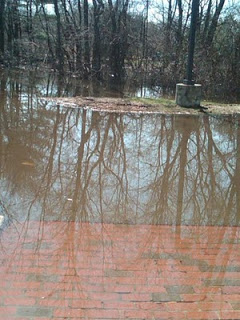
As I gaze out onto my office parking lot in Concord, Massachusetts, I see an amazing sight...a young boy and girl crouching low to the ground on the edge of the sidewalk that leads into my office building.

On closer observation, I see a net attached to a long pole in the young boy's outstretched hands. They are fishing for tadpoles in the flooded parking lot! With the historic level of flooding the Northeast has withstood over the past weeks, the ensuing hassles with closed roads, canceled train service between Boston and New York, rivers overflowing, dams breaking, pumping out of basements, loss of property and water damage to valuables; this sight in the parking lot...two small figures patiently fishing, eagerly anticipating their catch, made me stop and smile.

Time after time, I am reminded of the choices we make in viewing the world. Do we see a flooded parking lot with no where to park, or do we see an opportunity to fish for tadpoles in the sunshine? One situation, two very different experiences.

May you catch many tadpoles this month,
Pam

Love after Love


February is a month of the heart...both our physical heart evidenced by very important public health campaigns such as the Go Red for Women initiative by the American Heart Association; as well as the metaphorical heart...the heart of love and compassion. Often we think of love as simply the commercial accoutrements of Valentine's Day with roses and chocolates, but can we think of it as much more? How do we create a culture of compassion and empathy for ourselves and others? Now that the Hallmark day of love has passed, I thought I would share this poem by Derek Walcott that touches upon the very difficult task of compassion for self. I have included an audio clip of Jon Kabat-Zinn reading the poem....enjoy!

What does the poem mean to you? How have you included compassion for self into your day to day life? I would love to hear your thoughts and comments!


Love After Love

by Derek Walcott

The time will come
when, with elation,
you will greet yourself arriving
at your own door, in your own mirror,
and each will smile at the other's welcome,

and say, sit here. Eat.
You will love again the stranger who was your self.
Give wine. Give bread. Give back your heart
to itself, to the stranger who has loved you

all your life, whom you ignored
for another, who knows you by heart.
Take down the love letters from the bookshelf,

the photographs, the desperate notes,
peel your own image from the mirror.
Sit. Feast on your life.

Request for Research Help from Health Bloggers


Do you or does someone you know blog about their chronic illness? Lisa Gualtieri, PhD and I are interested in the motivation of why people choose to start and maintain a health blog for a research survey we are conducting. Can you help us out by answering the questions below or forwarding them on to health bloggers you may know? We appreciate any help you can provide us! Feel free to send emails directly to us at: pressler@stressresources.com or lisa@acm.org or post your answers in the comment section below.


We are researching why people choose to start and maintain a blog about a health condistion and would appreciate your answers to these questions:


When and why did you start your blog?

What do you see at the primary reason(s) you continue blogging?

How often do you typically post?

What types of feedback do you receive? How many comments do you typically get to each post?

Do you know how many unique visitors you have during a particular time period (say 2009)?

Do you do anything to promote your blog or attract new readers?

Do you use your real name in your blog?

Do you read other blogs by people with health issues and, if so, which and why?

Have you shown your blog to your doctor or other healthcare professional?

It's All About Connection


Each year The Kenneth Schwartz Center selects a Compassionate Caregiver who embodies the qualities of empathy, compassion, caring and presence in their work and life. This year's winner is Dr. Amy Ship, a primary care physician at Beth Israel Deaconess Medical Center in Boston. I was particularly moved by Dr. Ship's acceptance speech, where she explains that it is all about connection...connecting through presence, through compassion, through understanding as both the care-giver and care-receiver. “The longer I’ve practiced medicine, the more I’ve come to realize that we are all, as the years go on, ‘survivors,’” she said. “For some it is cancer, but for others it is diabetes, or seizures, or kidney failure, or all of the above. Others are survivors of loss – loss of a limb, loss of sight, loss of autonomy, loss of hope, loss of a loved one. And I have learned that many of us – like me – carry with us some secret sorrow – a loss or challenge that is not noticeable. Connecting with patients means looking for what is not immediately visible, listening for the hole in another’s heart.”

I encourage you to view Dr. Ship's speech by clicking here and see and hear what connection in healthcare is all about! Congratulations, Dr. Amy Ship, truly a compassionate caregiver.

Engage With Grace: The One Slide Project

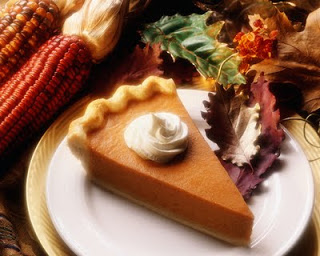
I was honored to again be asked to participate in this year's Engage With Grace blog rally by my friend, Paul Levy, President and CEO of Beth Israel Deaconess Medicial Center in Boston. Thanksgiving is traditionally a time to gather with friends and family...and a perfect time to ask, listen, and learn about loved ones' hopes and desires if they could not speak for themselves. So between the football games, the turkey, and the pumpkin pie...take some time to begin a conversation by sharing Engage with Grace with the important people in your life.

Wishing you and your family a happy and healthy Thanksgiving,
Pam


"Last Thanksgiving weekend, many of us bloggers participated in the first documented “blog rally” to promote Engage With Grace – a movement aimed at having all of us understand and communicate our end-of-life wishes.

It was a great success, with over 100 bloggers in the healthcare space and beyond participating and spreading the word. Plus, it was timed to coincide with a weekend when most of us are with the very people with whom we should be having these tough conversations – our closest friends and family.

Our original mission – to get more and more people talking about their end of life wishes – hasn’t changed. But it’s been quite a year – so we thought this holiday, we’d try something different.

A bit of levity.

At the heart of Engage With Grace are five questions designed to get the conversation started. We’ve included them at the end of this post. They’re not easy questions, but they are important.
To help ease us into these tough questions, and in the spirit of the season, we thought we’d start with five parallel questions that ARE pretty easy to answer:


Silly? Maybe. But it underscores how having a template like this – just five questions in plain, simple language – can deflate some of the complexity, formality and even misnomers that have sometimes surrounded the end-of-life discussion.

So with that, we’ve included the five questions from Engage With Grace below. Think about them, document them, share them.

Over the past year there’s been a lot of discussion around end of life. And we’ve been fortunate to hear a lot of the more uplifting stories, as folks have used these five questions to initiate the conversation.

One man shared how surprised he was to learn that his wife’s preferences were not what he expected. Befitting this holiday, The One Slide now stands sentry on their fridge.

Wishing you and yours a holiday that’s fulfilling in all the right ways. "


To learn more please go to http://www.blogger.com/www.engagewithgrace.org. This post was written by Alexandra Drane and the Engage With Grace team.

Musical House Calls

The Longwood Symphony, an orchestra made up of physicians, medical researchers and health care providers, broke with their tradition of playing a large concert and instead took their music to their audience -- their patients. Dr. Lisa Wong, pediatrician and president of the Longwood Symphony Orchestra stated,“To launch this year, instead of having a concert in Jordan Hall, where we usually play for 800 to 1,000 audience members, we thought we’d bring it to the patients". This year the healer musicians were broken into several groups that spread out over Boston, visiting health centers, hospitals and elder care centers in an initiative called LSO on Call: Health and Harmony in the City. They reached a similar number of audience members yesterday, playing for a total of about 800 in nearly two dozen small concerts.
To read more about this great group of healing musicians, click here for the Boston Globe article.

My Summer Labyrinth Quest

I am fascinated with labyrinths and their use in meditation and health. On my summer travels I explored a number of labyrinths in the Midwest that I found on the worldwide labyrinth locator. Each of these five labyrinths are unique but are similar in their ability to allow the user to stop, take a breath, observe and proceed. Please share photos of your favorite labyrinths by emailing them to me and I will post them here. Enjoy!


Ellsworth Labyrinth Garden, Ellsworth Michigan
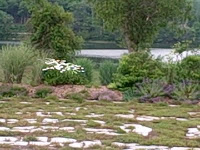
11 circuit, Medieval/Santa Rosa labyrinth. Constructed in 2004 by members of the community of Ellsworth. It is located on the banks of Lake Ellsworth and surrounded by perennial gardens. mosaic stepping stones line the outer edges of the labyrinth made by community members representing their hopes and wishes. (http://mi.imagemakers.com/labyrinth.html)


Sacred Sparks, East Jordan Michigan
Linda and Jerry Aydlott have lovingly constructed this classical labyrinth on the land behind their gallery and store in Northern Michigan. Labyrinth, goddess garden and rustic fairy walk at the back of their property are all open to visitors to explore. The labyrinth is a 7-circuit design, 50 feet in diameter and was constructed from field stones in 1998. (http://sacredsparks.com/)


Raven Hill Discovery Center, East Jordan Michigan
Constructed from field stones, this rustic classical labyrinth graces the front entrance to Raven Hill Discovery Center. It was constructed in 2004 and is 35 feet in diameter(http://ravenhilldiscoverycenter.org/)


Nelson's Herbs, Edwardsburg Michigan
Imagine a labyrinth constructed of over 560 lavender plants...that is what I experienced at Nelson's Herbs. A fragrant meditative walk. Originally built in 2004, it is 60 feet in diameter in the medieval/Santa Rosa style. (nelsonsherbs@aol.com)


Saint Mary's College, Notre Dame Indiana
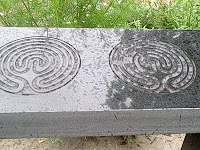
Located near the entrance to Saint Mary's College, this is a 7-circuit classical design constructed with black river rocks with circular pavers to line the path. Twin finger labyrinths are near the entrance allowing you to "walk the labyrinth" with your hands. (http://saintmarys.edu/)

Finding Meaning in the Face of Mortality

I recently read an interesting article in the Wall Street Journal by Melissa Beck: A New View, After Diagnosis, highlighting a program on "meaning-making" at Memorial Sloan-Kettering for advanced stage cancer patients. The program is based on the seminal work of Viktor Frankl, Man's Search for Meaning, in which he suggests that people can endure any suffering if they know their life has meaning. Dr. William Breithart, who developed the program known as meaning-centered psychotherapy, explains that through the program participants are guided to "reconnect with many sources of meaning in life -- love, work, history, family relationships, and teaches them that when cancer produces an obstacle in one, they can find in one, they can find meaning in another". Results of a pilot study comparing "meaning-making" groups compared to traditional cancer support groups were encouraging in respect to decreased anxiety and increased spiritual well-being.
You don't need to have cancer to benefit from the exercise of reflecting on what is most meaningful in your life. We are generally too mindless and busy to notice! But it is never too late to stop, take a breath, and reflect on what we love.
Empathy vs Emotional Reasoning

Is there a difference between empathy and emotional reasoning? Michael LaFerney, PhD, PMHCNS-BC, believes that healthcare professionals often confuse the two, and this can often hinder or derail patient-provider communication. In the current edition of Advance for Nurses, Dr. LaFerney defines empathy "as the ability to understand another person's circumstances, point of view, thoughts and feelings." He goes on to explain that, "Empathy involves communication. Trying to understand what another person is experiencing without communication leads to interpretation without meaning. It becomes a mechanism of internal thought processes rather than an understanding of another's point of view or feelings." Dr. LaFerney describes emotional reasoning as "mind reading" on the part of the healthcare professional; unconsciously inferring one's own feelings, anxiety, or needs to the patient. Emotional reasoning is a lot faster for harried physicians and nurses than empathetic communication, because it does not require slowing down and taking time to truly listen to the patient. But as Dr. LaFerney points out it often leads to misdiagnosis and disconnection from the patient's needs, fears, or desires. The bottom line is MORE COMMUNICATION LEADS TO QUALITY HEALTHCARE.
What are your thoughts on empathy vs. emotional reasoning?

Medicine in the Age of Twitter

Dr. Pauline Chen poses an interesting question in her NY Times article, Medicine in the Age of Twitter: Does online social media help or hinder patient-provider communication? If you haven't heard about Twitter, it is a new social media platform that allows users to communicate via short, 140 characters or less, "tweets" to other users. I am intrigued about the possibilities of connection, but am wary of the lack of human touch. What do you think?

Letting the Patient Call the Shots

Today's New York Times has an interesting article written by Dr. Pauline Chen exploring what we, in the healthcare system, really mean by "patient centered care". Does the definition of patient centered care shift if we are in the role of patient or healthcare professional? In the article, Letting the Patient Call the Shots, Dr. Donald Berwick, president of the Institute for Healthcare Improvement in Cambridge, Massachusetts, suggests that, “ We would all be far better off if we professionals recalibrated our work such that we behaved with patients and families not as hosts in the care system, but as guests in their lives.” Radical changes in our healthcare system will need to occur to allow this to happen, are we ready for such changes? What do you think?

Perfectly Happy?

Cognitive scientists who have conducted research on happiness have found that we are not very good at predicting what will make us happy. Ironically, chronic pain, constant noise can decrease our happiness dramatically and winning the lottery or achieving a life long wish often do not substantially increase our overall happiness. A recent Boston Globe article, Perfectly Happy, explores "happiness research" and its role in guiding priorities for social and health policy.

What do you think?

Quality of Life

Thank you to those of you who alerted me to a wonderful documentary series which aired on WBUR in Boston last week. It is beautifully written and produced, an informative view of the dilemma over end of life care in this country. The title of the documentary is Quality of Death, End of Life Care in America: Inside-Out. As I listened to the documentary I felt a more appropriate title might be Quality of Life instead of Quality of Death because even as patients, families and healthcare providers prepare for death, life continues. Perhaps our emphasis on what we DON'T want done at the end of life overshadows what we DO want done? I read an interesting article recently that proposed changing the terminology of D.N.R. (Do Not Resuscitate) to A.N.D. (Allow Natural Death). Is there is a difference in your mind between these two statements, or do you feel it is only semantics? This is difficult topic to wrestle with but one that is growing in prominence in the health care world as we confront a rapidly aging population as well as staggering healthcare costs.