Culinary Mindfulness


It's that time of year again...when our local CSA (community supported agriculture), First Root Farm  opens for the season. For the past several years, beginning the first week of June and ending around Thanksgiving, we have enjoyed a new way of eating....only local, seasonal vegetables. This is more of a challenge than first imagined, but always a wonderful exercise in mindfulness and curiosity. One cannot get too comfortable with tried and true recipes. Let's be honest, how many times have you needed to figure out what to do with kohlrabi at 6 pm?  Looking forward to lots of mindful cooking, thanks to our farmers, Laura and Nina.

From Sedona to Boston...Powerful and Resilient


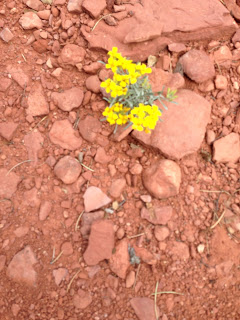
Awe-Inspiring, Powerful and Resilient...these were the words that came to me as I drank in the breathtaking beauty of Sedona, Arizona on April 12.   Less than 72 hours later, on April 15, I was back in Boston and blindsided by the emotional rollercoaster that ensued following the Boston Marathon bombings.


As the new normal has begun to settle into Boston, as it did in the weeks and months following 9/11 in New York City, those same words that resonated with me as I scanned the magnificent vistas in Sedona, surface as I continue to witness the amazing ability of the human spirit to bounce back from adversity; tenacious and strong...Awe-inspiring, Powerful and Resilient. 


Musings on Life, Death and Springtime


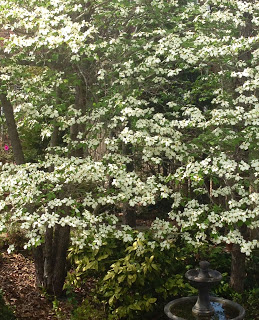
This is the season when the ground swells with new life, trees burst forth with magnificent blossoms and the earth seems to come alive once more.  I am struck by this dichotomy more acutely than usual this year: As I breathe in the sweet fragrances of April, I am also preparing for a journey to Arizona to help my mother prepare for the burial of my stepfather.  The yin and yang of life -- birth and death, always teetering in some sort of cosmic balance.  

I often wonder; would the spring be less exciting and glorious if we never had winter?  Do we somehow need the reminder of life's fragility and impermanence to treasure the innate beauty of the present moment?  

And so, as the musing continues, I am filled with gratitude for the wake-up call I receive each spring when I am renewed with awe and wonder.

Do We Need to Lose Things Before We Can Find Kindess?

I was pleased to learn that the award winning poet, Naomi Shihab Nye is the 2013 Robert Creeley Foundation Winner and will be presenting a reading of her poems in the Boston area (Acton-Boxborough High School, Acton MA) on Wednesday, March 6 at 7:30 PM.

One of her poems, Kindness, is a particular favorite of mine.  I was first introduced to this poem when I was training to teach mindfulness at the Center of Mindfulness in Medicine, Health Care, and Society. What struck me when I first read the poem and as I re-read the poem again and again is the notion that experiencing loss opens one to the ability to give and receive kindness more wholly.

What do you think? I would love to hear your thoughts and comments...do we need to lose things before we can find kindness?


Kindness
(Naomi Shihab Nye)
Before you know what kindness really is
you must lose things,
feel the future dissolve in a moment
like salt in a weakened broth.
What you held in your hand,
what you counted and carefully saved,
all this must go so you know
how desolate the landscape can be
between the regions of kindness.
How you ride and ride
thinking the bus will never stop,
the passengers eating maize and chicken
will stare out the window forever.
Before you learn the tender gravity of kindness,
you must travel where the Indian in a white poncho
lies dead by the side of the road.
You must see how this could be you,
how he too was someone
who journeyed through the night with plans
and the simple breath that kept him alive.
Before you know kindness as the deepest thing inside,
you must know sorrow as the other deepest thing.
You must wake up with sorrow.
You must speak to it till your voice
catches the thread of all sorrows
and you see the size of the cloth.
Then it is only kindness that makes sense anymore,
only kindness that ties your shoes
and sends you out into the day to mail letters and
purchase bread,
only kindness that raises its head
from the crowd of the world to say
it is I you have been looking for,
and then goes with you everywhere
like a shadow or a friend.

Keep Calm and Carry On


Keep Calm and Carry On...have you been noticing that ubiquitous phrase and simple poster as much as I have lately? It seems to be everywhere! It has morphed into all forms of iterations as evidenced on Pinterest boards and Esty.com.  I was curious about where this saying came from and was surprised to learn that it first appeared in war torn England during the devastation of World War II as one of three propaganda posters that were distributed and hung in prominent public places. In fact it was meant to build resiliency among the people who had lost so much and were starting to rebuild their lives from the rubble. 

Throughout our lives, we will rebuild and reconstruct our lives through transitions, changes, joys and sorrows. Perhaps this simple phrase on the red and white poster can instill within us the same sense of resiliency as it did more than half a century ago. May we all...Keep Calm and Carry On


Great video of the history of the WWII poster: Keep Calm and Carry On

Healing the Broken Hearts in Newtown

As news of the horrific events in Newtown, Connecticut unfolded on Friday and over the weekend; 20 first grade students and 6 school staff murdered by a mentally ill young adult, my thoughts turned to those left behind...the families, friends and classmates. How will they begin to heal after suffering such unimaginable pain? I don't have any profound answers; I am without adequate words to comfort or explain such loss. After the memorial services have been held and the news media have moved on to new disasters, how will the broken hearts in Newtown begin to heal?

As one who has experienced every parent's worst nightmare, the loss of a child (my son Nick), perhaps this reflection, which I shared at last year's Pediatric Memorial Service at Massachusetts General Hospital and have also shared previously on this blog, may provide some hope for those beginning their journey of healing.

Sunday, November 6, 2011 ~ Massachusetts General Hospital, Boston, MA

"The only whole heart is a broken one...it lets the light in" ~Rabbi David Wolpe

"There are few choices afforded to us in how to survive the loss of a child.  Well meaning friends, relatives and professionals may advise us "not to let this tragedy define who we are", but I will have to respectfully disagree with this advice.  The tragedy of losing a child is a life changing event like no other: We are confronted with not only the loss of one we deeply love, but with the loss of our future as we had envisioned.  We are shaken to the very core of our existence and essence. Yes, this event will define us for the rest of our lives whether we want it to or not.

When our loss is new, it is unfamiliar and terrifying in its intensity.  I vividly remember waking up the morning after Nick died and being absolutely amazed and incredulous that the sun had the audacity to rise, that the school bus continued on its scheduled route down my street, that  people went to the grocery store, commuted to work and  that the mail was delivered...the outside world continued to function as if nothing had occurred.  It was a surreal scene.  Because for me it was as if a nuclear bomb had been detonated.  The world as I had known it had been destroyed with the death of my son.  My world now was defined as a new normal even though I wished desperately for the old normal to return. 

Rabbi and author, David Wolpe, aptly describes the feeling of new loss in this way  "When we experience a loss, a hole opens up inside of us. It is almost as if the loss itself plows right through us, leaving us gasping for air" and we bleed profusely through this opening. During the early days, months and years after our loss, we focus on how to slow down this  hemorrhage, this continuous emptying of grief.  But then something begins to change, very, very slowly; the immediate agony subsides. Around the edges of that opening, things begin to heal and scar tissue begins to form.  This is the point at which we can choose how the tragedy of our loss will continue to define our lives...we can choose  to allow the scar tissue to continue to form and thicken, closing the hole within us -- hardening us to the world with the unfairness and unjustness of our loss; or we can choose to allow the hole to remain open, allowing not only the stream of grief to flow out but permitting light, hope and meaning to enter.  I have chosen to allow the hole within me to remain open and this is one of the gifts my son has given me. 

Rabbi Wolpe suggests that "The only whole heart is a broken one, it lets the light shine in."  Allowing the hole to remain open, has allowed me to be a more compassionate person to others and myself, perhaps a bit less judgmental and more empathetic than I was in my old normal.  Keeping the hole open has made it easier for me to prioritize what really matters and not what I think should matter -- it now OK to say no to mundane tasks and yes to things that feed my soul.  I do not fear many things now -- after all the worst has happened to me, so what do I have to be fearful of now?  And most important, by keeping the hole open, continuing to allow the grief out and the light in, I am able to hold Nick and the meaning of his life close.  

So, perhaps I have what the professionals call a "maladaptive coping strategy", but I embrace the notion that yes, I have let this tragedy define me in a way I never imaged would be possible; by allowing my heart to remain broken, and open, it is, in my new normal, whole once more."
.

Let's Start a Revolution: Engage with Grace

For several years I have been pleased to donate my blog space over the Thanksgiving weekend to a wonderful project: Engage with Grace. For me end of life discussions are not an abstract concept, as I have journeyed with both family members and clients down this path.  Talking about end of life is not easy, but it does not need to be the taboo subject that it is currently in our culture.  If in less than a generation we have shifted our cultural norms on other topics that certainly were never discussed in the past: cancer, erectile dysfunction, birth control, and feminine hygiene products then certainly we can start a revolution to normalize the discussion about end of life decision making!

This year I am expanding my participation in Engage with Grace to include the entire holiday season, not only Thanksgiving weekend.  Let's begin changing the culture by making it a priority to ask and listen to your friends and family about end of life wishes before we ring in 2013.

Engage With Grace This Holiday Season

"One of our favorite things we ever heard Steve Jobs say is… ‘If you live each day as if it was your last, someday you'll most certainly be right.’
We love it for three reasons:
  1. It reminds all of us that living with intention is one of the most important things we can do.
  2. It reminds all of us that one day will be our last. 
  3. It’s a great example of how Steve Jobs just made most things (even things about death – even things he was quoting) sound better.

Most of us do pretty well with the living with intention part – but the dying thing? Not so much. 

And maybe that doesn’t bother us so much as individuals because heck, we’re not going to die anyway!! That’s one of those things that happens to other people….

Then one day it does – happen to someone else.  But it’s someone that we love.  And everything about our perspective on end of life changes.  

If you haven’t personally had the experience of seeing or helping a loved one navigate the incredible complexities of terminal illness, then just ask someone who has.  Chances are nearly 3 out of 4 of those stories will be bad ones – involving actions and decisions that were at odds with that person’s values.  And the worst part about it? Most of this mess is unintentional – no one is deliberately trying to make anyone else suffer – it’s just that few of us are taking the time to figure out our own preferences for what we’d like when our time is near, making sure those preferences are known, and appointing someone to advocate on our behalf. 

The holidays are a time for gathering, for communing, and for thinking hard together with friends and family about the things that matter.  Here’s the crazy thing - in the wake of one of the most intense political seasons in recent history, one of the safest topics to debate around the table this year might just be that one last taboo: end of life planning. And you know what? It’s also one of the most important. 

Here’s one debate nobody wants to have – deciding on behalf of a loved one how to handle tough decisions at the end of their life. And there is no greater gift you can give your loved ones than saving them from that agony.  So let’s take that off the table right now, this weekend.  Know what you want at the end of your life; know the preferences of your loved ones.    Print out this one slide with just these five questions on it. 

Have the conversation with your family.  Now.  Not a year from now, not when you or a loved one are diagnosed with something, not at the bedside of a mother or a father or a sibling or a life-long partner…but NOW.  Have it this holiday season when you are gathered together as a family, with your loved ones.  Why? Because now is when it matters. This is the conversation to have when you don’t need to have it.  And, believe it or not, when it’s a hypothetical conversation – you might even find it fascinating.   We find sharing almost everything else about ourselves fascinating – why not this, too?   And then, one day, when the real stuff happens?  You’ll be ready. 

Doing end of life better is important for all of us.  And the good news is that for all the squeamishness we think people have around this issue, the tide is changing, and more and more people are realizing that as a country dedicated to living with great intention – we need to apply that same sense of purpose and honor to how we die. 

One day, Rosa Parks refused to move her seat on a bus in Montgomery County, Alabama.  Others had before. Why was this day different?  Because her story tapped into a million other stories that together sparked a revolution that changed the course of history.

Each of us has a story – it has a beginning, a middle, and an end.  We work so hard to design a beautiful life – spend the time to design a beautiful end, too.  Know the answers to just these five questions for yourself, and for your loved ones.  Commit to advocating for each other.  Then pass it on." 
Let's start a revolution: Engage with Grace


Sustainable Resilience

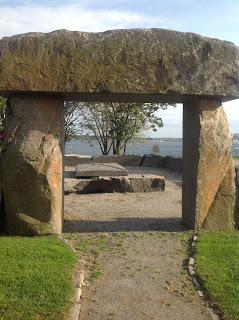
Sustainable resilience...I love the concept of being able to bounce back from challenges and adversity time and time again. But often it is the little things that wear away our resilience, like water wears away stone: the traffic jam on the way to work, the parking space that disappears before our eyes, running late and realizing that you left your phone on the kitchen counter, etc etc. Slowly, invisibly wearing us down drop by drop. One way to help ourselves create a more sustainable resilience is to cultivate mindful moments amidst the trials and tribulations. And so it was for me today...finding incredible beauty on my long walk from a very remote parking space at UMass Boston. These photos were taken on the UMass Boston campus near the Massachusetts Archives Building, sights I never would have seen if I had snagged that first close parking spot.

Concord Grape Pie....An Adventure in Kitchen Meditation

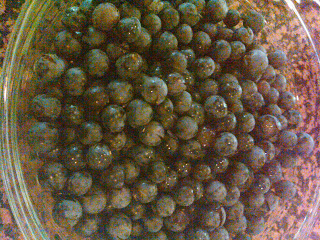
Stemmed Concord grapes
As many of you know, I live in Concord, Massachusetts....home of the shot heard' 'round the world, literary luminaries (Emerson, Thoreau, Alcott, etc), and the Concord grape. When we moved to our current house, less than a mile from Ephraim Bull's (the original propagator of the Concord grape) cottage our then 2nd grade daughter begged us to plant some grape vines on our fence.  For many years, the harvest was to be generous... pitiful.  Maybe a handful of grapes would be gathered if we were lucky.  Well, time and patience has finally paid off...this year we had a bumper crop of Concord grapes.  Two grocery bags full are on my kitchen counter! And that 2nd grade daughter who begged for the grape vines on the fence, is now a 2nd grade teacher (as I said, time and patience are key to growing grapes).

A couple of years ago, when our vines started to produce more than a handful of grapes a season, I searched for something unique to do with the grapes and came across a recipe for Concord Grape Pie online.  Serendipitously, it was posted on a site called PieChef.com and the "pie chef" was none other than a Concord friend of mine, Jane Fisher.
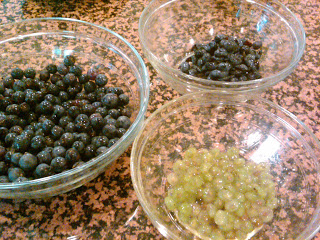
Separating the skin from the pulp of the Concord grapes
Partaking in baking with Concord grapes is a mindful experience -- they are bountiful for only a short time each year in the beginning of September.  They do not ship well, so are not often found in bulk in grocery stores nationwide. To make a pie from Concord grapes, one must first stem the grapes, then separate the inside from the skin, and finally remove the seeds.  While this may sound like an arduous process, it is actually simple, repetitive, filled with touch, sight, smell, taste, sound and becomes what I fondly refer to as "kitchen meditation".


So it is with mindful gratitude to Jane Fisher that I share this recipe for:

Concord Grape Pie


Preheat oven to 400 degrees.

9" unbaked pie crust (double crust or single crust with crumb topping)
About 1.5 pounds (4 cups) Concord grapes
3/4 - 1 cup sugar (I use 3/4 c)
1/4 cup all purpose flour
1/4 tsp salt
2 TB butter melted
1 TB lemon juice

(I usually make a double crust pie, but if you prefer a crumb topping, follow the recipe below )
Crumb topping
1/2 cup quick or rolled oats
1/2 cup sugar
1/4 cup flour
1/4 cup butter melted

Remove grapes from stems. Slip skins from grapes (it's easy to do, just squeeze gently and the skin will separate from the pulp), placing the pulp in a medium saucepan and reserving the skins in a bowl. Bring the pulp to a boil. Reduce heat and simmer for about 5 minutes. The pulp will soften and get lighter in color.

Press the pulp through a sieve into a medium bowl; this will remove the seeds. Add the skins to the pulp. Melt butter and add butter and lemon juice to grape mixture.
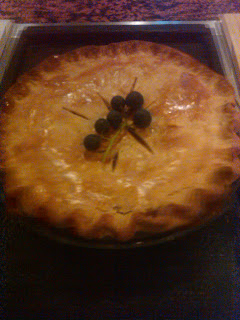
Concord Grape Pie

In a large bowl, combine the sugar, flour, and salt. Add the grape mixture and stir well. Pour into an unbaked pie crust and either cover with a crust or sprinkle crumb topping over the top of the pie.


Bake at 400° F for about 40 minutes, until fruit is bubbling and topping is lightly browned.
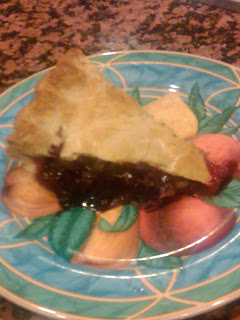
 
Concord Grape Pie


Pulling Back the Bow and Releasing the Arrow


 woman shooting arrow"You are the bows from which your children
as living arrows are sent forth.
The archer sees the mark upon the path of the infinite,
and he bends you with his might
that his arrows may go swift and far.
Let your bending in the archer's hand be for gladness;
For even as he loves the arrow that flies,
so he loves also the bow that is stable." ~Kahlil Gibran 


This excerpt from Kahlil Gibran's On Children, echoes in my mind today.  My daughters are now adults and this month has been one of great happiness, pride, and inevitable change.  Our eldest daughter became engaged to a wonderful man last week and our youngest daughter is embarking on her first teaching position as a second grade teacher in Ohio next week.

I am mindful of the moments of joy and also of the moments of longing for the past, holding tightly to the arrows and resisting their release: the age old parental dilemma. To know when to let go and when to hold on is difficult; it challenges us to relinquish control and embrace vulnerability. And so, it is with a heart filled with pride and gratitude for my daughters, Kim and Jen, that I pull back the bow and release the arrows, watching them soar with strength, beauty and joy into the future.   

A Patient's Story

 "If I have learned anything, it is that we never know when, how, or whom a serious illness will strike. If and when it does, each one of us wants not simply the best possible care for our body but for our whole being.’’  ~ Kenneth B. Schwartz

Seventeen years ago a seminal piece was published by the Boston Globe.  It was entitled: A Patient's Story, written by Boston healthcare attorney Ken Schwartz.  Ken had been diagnosed with stage 4 lung cancer and was now facing the end of his life in 1995.  Through his eloquent prose, Ken taught us all that often it is the compassion of the health care provider, the humanness of the experience, that is as important as the medication and high-tech treatments that we offer our patients. The Schwartz Center for Compassionate Healthcare was founded after Ken's death and has been doing wonderful work on ever since. Little did I know when I read A Patient's Story in 1995 that it would reflect and inform my own experiences as a mother of a terminally ill adolescent and ultimately would redirect my professional life as a passionate advocate of the integration of compassion and empathy into health care environments, for both the patient and the caregiver.

Today, the Boston Globe reflects on the past seventeen years since the publication of A Patient's Story, and of The Schwartz Center for Compassionate Healthcare's work on supporting and improving compassionate caregiving. Click here to read the article: Finding Healing for the Healers by Helen Shen.

I would love to hear your stories about compassionate caregiving or perhaps opportunities that were lost. How can we work together to ensure compassionate and empathic healthcare?  Please feel free to post your thoughts and comments on my blog.

Untangling Ourselves Through Tangling

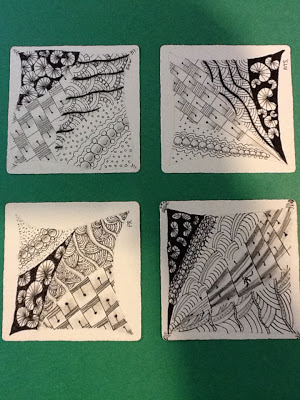
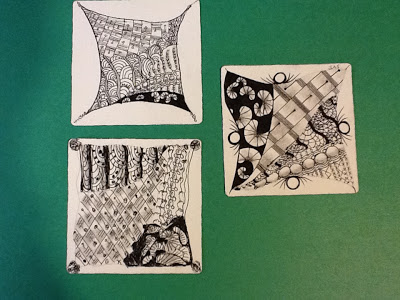
 At our recent Stress Resources' Meditation Maintenance Session, I was enthralled by a meditative form of drawing or "tangling", which Meditation Maintenance regular, Ann S. generously demonstrated and taught our small group of meditators. A whole process has evolved around the use of drawing repetitive interlocking or tangling lines on paper, called Zentangle.  As each of us focused, created repetitive patterns, and anchored ourselves to the paper and pen, a sense of calm centerdness fell over the room and I was reminded of the common denominators of meditative practice: focus, awareness and bringing oneself into the present moment. How wonderful to find ourselves untangling through the tangling of lines on a small piece of paper.

Here are the finished "tangles" we made at the June Meditation Maintenance Session.

My Weekly Culinary Adventure in Mindfulness

Those of you who have followed my blog for some time know that I participate in a CSA or "community supported agriculture" each year -- our CSA is the lovely, First Root Farm on Lexington Rd in Concord, MA.  For me it is the best of all worlds, my family gets to eat fresh, local vegetables each week and we support a local farm in our town at the same time.  We also share in the farm's bounty or losses each year (like last year when the eagerly anticipated tomato harvest was disappointingly sparse). 

Today was "opening day" for First Root Farm and I was thrilled to pick up our share of fresh picked arugula, radishes, chard, lettuce, kohlrabi, and garlic scapes.  Each week is an exercise in mindfulness...I never know until I pick up my share at 4 PM what we will eat for dinner that night.  But the beauty of this in-the-moment meal planning is that whatever I find at our farm pickup each week is always interesting, colorful and surprisingly delicious -- even if I don't quite know what to do with it.


Thanks, Laura, Nina, and Ariel, our First Root Farmers, for making our Thursdays mindful culinary adventures!

Cambridge Film Screening of The Dhamma Brothers

There will be a film screening of the award winning documentary, The Dhamma Brothers, on Monday, May 21 at 7:30 PM at the Brattle Theater in Cambridge, MA.  The film makers, director and producer will be present at this screening.

If you haven't seen this amazing film, do yourself a huge favor and make sure to view it.  This film will open your mind and heart to the practice of mindfulness in a most unlikely place, a maximum security prison in Alabama.


Hope to see you at the Brattle Theater on May 21 at 7:30 PM

Real Nurse (RN) Contest...Win a CD or Starbucks Gift Card

Did you know that registered nurses make up the largest sector of the health care professions?  We are 3.1 million strong and according to national surveys, nursing has remained the most trusted profession for the past decade. On a humorous note, it has also been reported that nurses drink the most coffee of any profession. 

During the week of May 6-12, Stress Resources is joining the American Nurses Association in celebrating Nurses: Advocating, Leading, Caring, as part of National Nurses Week 2012. The purpose of the week long celebration is to raise awareness of the value of nursing and help educate the public about the role nurses play in meeting the health care needs of the American people.
  
In honor of 2012 National Nurses Week, Stress Resources is holding a Real Nurse (RN) contest for all nurses (current and retired) and nursing students.   

"I KNEW I WAS A REAL NURSE WHEN......" 

Prizes:
1st Opening the Door to Meditation CD ($19.94 value)
2nd Starbucks Gift Card ($10 value)

To participate simply email your answer to the following: "I knew I was a REAL NURSE when...." Your answers can be funny or serious. Deadline is midnight, May 12.  I will select two winners from all entries submitted and include answers (without names) in the June Stress Resources newsletter and on this blog.  Email me at Pam Ressler (pressler@stressresources.com) Make sure you include your name, what nursing school/university you attend(ed), and your address

Get A Life: A Commencement Address by Anna Quindlen

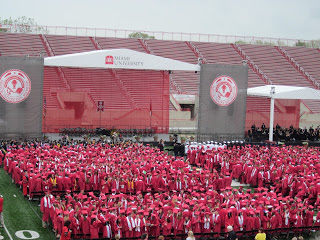
I have just returned from my youngest daughter's college commencement ceremony. As you can imagine, I am overflowing with pride and joy for Jen as she enters this new phase in her life.  I also recalled my own undergraduate commencement over three decades ago.  I have absolutely no recollection of who the speaker was or what wonderful words of wisdom he/she imparted to us freshly minted college grads embarking on our adult lives in 1979. Their words fell on deaf ears, I was too interested in hurrying on to the next step in my plan and moving into adulthood.  Perhaps that is why I enjoy reading exceptional commencement addresses now -- to read the words of inspiration through a different life lens; one with a bit less impatience and perhaps a bit more perspective on the joys and sorrows of being human.  I am not sure what my 21 year old self would have thought of Anna Quindlen's commencement address to Villanova graduates in 2000, but I hope she would have been even half as inspired as I am now.

"I have no specialized field of interest or expertise, which puts me at a disadvantage, talking to you today. I'm a novelist. My work is human nature. Real life is all I know. Don't ever confuse the two, your life and your work. The second is only part of the first.
Don't ever forget what a friend once wrote Senator Paul Tsongas when the senator decided not to run for reelection because he'd been diagnosed with cancer: "No man ever said on his deathbed I wish I had spent more time in the office." Don't ever forget the words my father sent me on a postcard last year: "If you win the rat race, you're still a rat." Or what John Lennon wrote before he was gunned down in the driveway of the Dakota: "Life is what happens while you are busy making other plans."
You walk out of here this afternoon with only one thing that no one else has. There will be hundreds of people out there with your same degree; there will be thousands of people doing what you want to do for a living. But you will be the only person alive who has sole custody of your life. Your particular life. Your entire life. Not just your life at a desk, or your life on a bus, or in a car, or at the computer. Not just the life of your minds, but the life of your heart. Not just your bank account, but your soul.
People don't talk about the soul very much anymore. It's so much easier to write a resume than to craft a spirit. But a resume is a cold comfort on a winter night, or when you're sad, or broke, or lonely, or when you've gotten back the test results and they're not so good.
Here is my resume: I am a good mother to three children. I have tried never to let my profession stand in the way of being a good parent. I no longer consider myself the center of the universe. I show up. I listen, I try to laugh. I am a good friend to my husband. I have tried to make marriage vows mean what they say. I show up. I listen. I try to laugh. I am a good friend to my friends, and they to me. Without them, there would be nothing to say to you today, because I would be a cardboard cutout. But call them on the phone, and I meet them for lunch. I show up. I listen. I try to laugh.
I would be rotten, or at best mediocre at my job, if those other things were not true. You cannot be really first rate at your work if your work is all you are.
So here is what I wanted to tell you today:
Get a life. A real life, not a manic pursuit of the next promotion, the bigger paycheck, the larger house. Do you think you'd care so very much about those things if you blew an aneurysm one afternoon, or found a lump in your breast? Get a life in which you notice the smell of salt water pushing itself on a breeze over Seaside Heights, a life in which you stop and watch how a red-tailed hawk circles over the water gap or the way a baby scowls with concentration when she tries to pick up a cheerio with her thumb and first finger.
Get a life in which you are not alone. Find people you love, and who love you. And remember that love is not leisure, it is work. Each time you look at your diploma, remember that you are still a student, still learning how to best treasure your connection to others. Pick up the phone. Send an e-mail. Write a letter. Kiss your Mom. Hug your Dad. Get a life in which you are generous.
Look around at the azaleas in the suburban neighborhood where you grew up; look at a full moon hanging silver in a black, black sky on a cold night.
And realize that life is the best thing ever, and that you have no business taking it for granted. Care so deeply about its goodness that you want to spread it around. Once in a while take money you would have spent on beers and give it to charity. Work in a soup kitchen. Be a big brother or sister.
All of you want to do well. But if you do not do good, too, then doing well will never be enough. It is so easy to waste our lives: our days, our hours, our minutes. It is so easy to take for granted the color of the azaleas, the sheen of the limestone on Fifth Avenue, the color of our kid's eyes, the way the melody in a symphony rises and falls and disappears and rises again. It is so easy to exist instead of live. I learned to live many years ago.
Something really, really bad happened to me, something that changed my life in ways that, if I had my druthers, it would never have been changed at all. And what I learned from it is what, today, seems to be the hardest lesson of all. I learned to love the journey, not the destination. I learned that it is not a dress rehearsal, and that today is the only guarantee you get. I learned to look at all the good in the world and to try to give some of it back because I believed in it completely and utterly. And I tried to do that, in part, by telling others what I had learned. By telling them this:
Consider the lilies of the field. Look at the fuzz on a baby's ear. Read in the backyard with the sun on your face. Learn to be happy. And think of life as a terminal illness because if you do you will live it with joy and passion, as it ought to be lived.
Well, you can learn all those things, out there, if you get a life, a full life, a professional life, yes, but another life, too, a life of love and laughs and a connection to other human beings. Just keep your eyes and ears open. Here you could learn in the classroom. There the classroom is everywhere. The exam comes at the very end. No man ever said on his deathbed I wish I had spent more time at the office. I found one of my best teachers on the boardwalk at Coney Island maybe 15 years ago. It was December, and I was doing a story about how the homeless survive in the winter months.
He and I sat on the edge of the wooden supports, dangling our feet over the side, and he told me about his schedule; panhandling the boulevard when the summer crowds were gone, sleeping in a church when the temperature went below freezing, hiding from the police amidst the Tilt a Whirl and the Cyclone and some of the other seasonal rides. But he told me that most of the time he stayed on the boardwalk, facing the water, just the way we were sitting now even when it got cold and he had to wear his newspapers after he read them.
And I asked him why. Why didn't he go to one of the shelters? Why didn't he check himself into the hospital for detox? And he just stared out at the ocean and said, "Look at the view, young lady. Look at the view."
And every day, in some little way, I try to do what he said. I try to look at the view. And that's the last thing I have to tell you today, words of wisdom from a man with not a dime in his pocket, no place to go, nowhere to be. Look at the view. You'll never be disappointed." ~ Anna Quindlen (2000 Villanova Commencement Address)

Spring Haiku

How can we not be mindful during spring????  A haiku quickly formed in my mind as I noticed the exquisite display of blossoms this week...

Spring Haiku


Clear pink plum blossoms
Outside my office window
Awakening spring

What is your seasonal haiku?  Please share a haiku with me on my blog (a haiku is a seventeen syllable poem of three lines, first line 5 syllables, second line 7 syllables, third line 5 syllables)

Pam Talks Pain

What a title...did it capture your attention?  I had a great time guest hosting with Tufts Pain Research, Education and Policy Program the weekly WEGO Health Health Activists' Tweetchat on March 13.  I am passionate about bringing more visibility to the invisible epidemic of chronic pain.  It is time we recognized that chronic pain (pain lasting more than 3 months) is not just a symptom but should be thought of as a disease entity that needs complex and multidisciplinary treatment.  Thanks again to the WEGO Health folks who do an amazing job amplifying the voices of health activists and advocates locally and globally.

#HAchat Recap: The Invisible Epidemic: Pam Ressler Talks Pain


130 million people in the US are chronically ill, and 116 million of these people suffer from chronic pain.  With so many suffering, it’s amazing that chronic pain is something rarely talked about and a constant source of tension between those who suffer from pain and their healthcare providers (HCP).  Why don’t people talk about chronic pain? Why is there stigma against those who suffer from chronic pain? As HealClick pointed out, no one has ever questioned the “stomach ache”, so how can HCPs doubt “unbearable pain”?

This week’s chat was hosted by Pam Ressler (pamressler), a current faculty member of the Pain Research, Education, and Policy (PREP) program at Tufts University, registered nurse, social media enthusiast and pain research advocate.  Wendy Williams (TuftsPREPpain), Associate director of the Tufts Prep program also joined in on the conversation.

Perceptions of Pain
pamressler: Huge problem…pain is invisible! It’s not something you can put under a microscope or cover with a bandage, and this is the biggest reason it’s so hard for physicians and HCPs to understand, it’s something that they can’t exactly put their finger on.  Many doctors seem to be under the impression that chronically ill patients “just want to swim in opiates” as TiffanyAndLupus put it, and they label these chronically ill patients as drug-seeking.  They are also hesitant to treat pain because they don’t want to get labeled as “dealers” of pain medication.  Then it’s the fact that there are different types of pain.  julianna12369: “There seems to be a breakdown when it comes to visits to hcp’s for chronic vs acute pain.” Co-morbidities can also stay a doctor’s hand when writing a prescription:  julianna12369: “There is a lot of stigma. As soon as someone sees I am #bipolar and I have #lupus, that’s it for taking much of my pain seriously.”  In this way, suffering from multiple conditions may undermine a patient’s “pain credibility” with their doctor. 
ArthritisAshley #HAchat I have anxiety & rheum arthritis, chiari, celiac, palindromic rheumatism, DIL, POTS, thyroid issues but anxiety is all many docs see -#HAchat
hockeygrl1:  i wish my dr would listen more. She attributes pain to #frbro & gives me antidepressants, sometimes i need more #hachat
kimmieCollas @hockeygrl1 & some of us can’t TAKE antidepressants (manic episodes & other nasty effects #HAchat
And even if you find a doctor who understands your pain, ER trips can lead to accusations of drug seeking behavior.  In the end pain has a bad reputation amongst both patients and caregivers. For patients, it’s a life altering inconvenience.  For HCPs:  ArthritisAshley “I hate that chronic pain disorders are associated with hypochondrism, pill-popping etc.”
But it’s not just about the pain. It’s about how others perceive your pain and how you perceive yourself.  It’s one thing to not have your doctor believe in the severity of your pain, but what if members of your own family were in doubt? hockeygrl1I agree on the family worried about pain medications. My daughter mentioned that she thought I refilled mine too soon. not true”.  What about all of the things that result from chronic pain, such as fatigue or depression? How do you treat these symptoms without throwing anti-depressants at the problem? Susanmees: “docs need to ask what else is happening in someones life, not just physical pain, mental &stress issues too”.

Thinking outside the doctor’s office
The chromatically ill and those suffering from chronic pain seem to be some of the biggest advocates of alternative therapies, even when doctors are not: kimmieCollas “most of the MDs I’ve talked to abt integrative therapies say there’s no proof – I say if it helps, I don’t care if there’s proof .”  Here are some therapies our Health Activists have tried:
@pamressler: We need to expand our tool box for chronic pain…meditation, yoga, tai chi all can play a role #hachat
@FabulousandSick: I totally agree. We also need to add diet changes to our tool box.. #HAchat
TiffanyAndLupus T1: This month I have been learning meditation and taking a chronic pain yoga class. BOTH are helping to relieve my pain! #HAchat -
bitogoth Finally started meeting with a therapist to address anxiety/stress aggravating chronic pain, and nice versa #HAchat
PainCHAS massage therapy is smart conservative solution. also should not forget about psychology
bitogoth Heat, hydro and electrotherapy all help for me, but not always accessible (hydro) #HAchat -


Writing your own pain scale
Just as different therapies work for different people, pain is different for everyone.  We often talk about how each patient is unique and that no one deals with their condition in the same way, reacts to medication the same way, or has the same needs in terms of their treatment or care. The same goes for pain, which is another reason pain is so hard for doctors to treat.  julianna12369I would like pain scale thrown out. I want my hcp to know that years in pain make my 5 diff then that 5″.  But how is a doctor supposed to treat that?   How does he or she know that your 5 is worse than someone else’s?  ArthritisAshleyMy pain & symptoms are always in flux. I could be fine one minute & immobilized the next”.
bitogoth suggested defining your own pain scale:  “I wrote my own scale for my doc- very specific. Has helped much in communicating pain”.  It will lead to a better conversation with your doctor about your pain, and also help your doctor decide on the best course of treatment.  You should also define your expectations with your doctor. While it’s important to strive for a pain-free life, it seems that most of our Health Activists found this to be unrealistic:  julianna12369I don’t expect to have ZERO pain, I think that’s unrealistic. Healthy people have SOME pain. Just manage pain.”  As always, communicate your needs to your doctor and come up with a plan to address them. Like patients in any other condition, the chronically ill and those suffering from pain are just expecting for their doctor to listen and respect them: julianna12369: “so my expectation of my HCP is to listen, believe, communicate, and try. And for me as a patient, the same.” TiffanyAndLupusI would like my Drs to know I am coming to them for help; because I don’t have answers.”
Finally two pieces of wisdom to carry you through the week.  Last week we heard from an HCP that doctors hear empowered groups more than empowered individuals, so don’t forget: TiffanyAndLupus Alone we are one; together we are strong. @HealClick: 130 million total chronically ill… The epidemic no one knows about.
And though we doubt you need a reminder of why it’s important to talk to your doctor about your pain: ArthritisAshley – “I had a doctor tell me it was “all in my head.” It was but NOT how he meant it – I had Chiari malformation & needed brain surgery.”

Do you have other alternative ways to deal with pain?  Additional tips for communicating with your HCP about pain?  Feel free to send additional ideas to editorial@wegohealth.com!
Make sure to join us next week for more on Health Activism and Healthcare Professionals!


Are We Truly Measuring Patient Satisfaction?

I was struck by an op-ed piece I read recently in the New York Times. The author, Theresa Brown, RN, in her piece entitled Hospitals Aren't Hotels, opines that we set unrealistic goals in medical treatment when  patient satisfaction scores are the primary measure of success. Is patient satisfaction  always correlated with more expensive or aggressive treatment?  Perhaps we need to redefine satisfaction? Can we shift our model of care from a "doing for" model to a "being with" model and still achieve patient satisfaction? Do we, as Theresa Brown suggests, always need to first hurt in order to heal?

 Lots of food for thought here...would love to hear your comments!

The Other Side of the Exam Table

This week I found my self on the "other side" of the exam table as a patient confronted with a medical decision. Two weeks ago, one innocent misstep left me with a tender and slightly swollen left foot. Being the watchful waiting type, I iced, elevated, and medicated with ibuprofen. Since the foot still seemed tender and swollen after 10 days, I sought out medical advice (besides my own). An x-ray showed a stress fracture of the 2nd and 3rd metatarsals (bones on the top of my foot). I was referred out to an orthopedic surgeon for follow up. 

Now this is where I think the story gets interesting and how it relates to how health care and the decisions we make each day that impact these costs. Upon consultation with the orthopedist, it was suggested that I also have an MRI to further visualize the foot.  In the past, I would have immediately scheduled an MRI but now with a high-deductible health care insurance policy, I paused and began an initially uncomfortable discussion with my health care provider of the cost/benefit ratio of having an MRI at this time, postponing it or forgoing it completely.  I asked if the information gathered by an MRI would change the proposed treatment of the injury which had been visualized by x-ray.  When I learned that the answer was no -- that the initial treatment would be the same, I respectfully declined having an MRI at this time.  Knowing that an MRI would cost me in the neighborhood of $1000+, and this would come out of my pocket due to my deductible, certainly influenced initiating the conversation I had with my provider. Would I have made this same decision if I did not know the financial cost of an MRI or if I would not be directly impacted by the cost?  I honestly don't know, but it became apparent to me that we need to educate ourselves, providers and patients, as to the cost of health care choices with  transparency and discussion.  We have all been removed from the true costs of health care, advanced diagnostic tools and pharmaceuticals by our current health care model. What else do we "buy" with total disregard to cost? I can't think of any other product or service.  I am a staunch advocate for universal health care; excellent health care should be a right in any civilized society -- but I am also an advocate of transparency of costs so we can have thoughtful, informed discussions regarding appropriate health care choices in terms of risks, benefits and costs with our providers.  If we know the financial costs of certain procedures or diagnostic tools  as well as potential benefits will that change our behavior as health consumers or our recommendations as health care providers?  

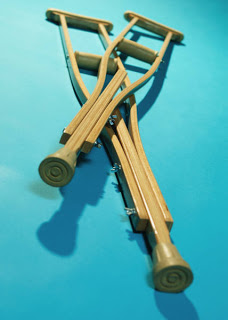
I am mulling over these questions in my mind and would love to hear your thoughts. By the way, my decision was to forgo the MRI at this time, to wear an Aircast boot, use crutches for two weeks and then reassess with my orthopedist the need for further diagnostic workup.  This is what participatory medicine is all about.