patterns and textures
origami hearts emerge
grateful for these gifts

Your Custom Text Here

patterns and textures
origami hearts emerge
grateful for these gifts

hearts, hearts, and more hearts
circle around each other
connecting with love

twenty year old self
what advice would I give her
be bold, have courage

fresh fruit in winter
gratitude for this bounty
small things make me smile

no coat, warm sun
tropical in New England
climate change is real

crimson reminder
poinsettia is thriving
not ready to go

today’s agenda
to breathe, to notice, to live
easy to forget

wintertime moment
dazzle before the darkness
late afternoon sun

textures and shadows
miniature mountain range
nature’s illusion

snowflakes dance and twirl
holly leaves anticipate
winter’s pas de deux

a tower of books
wintery day siren call
resist or succumb

A morning low tide
the invisible now seen
what else do we miss
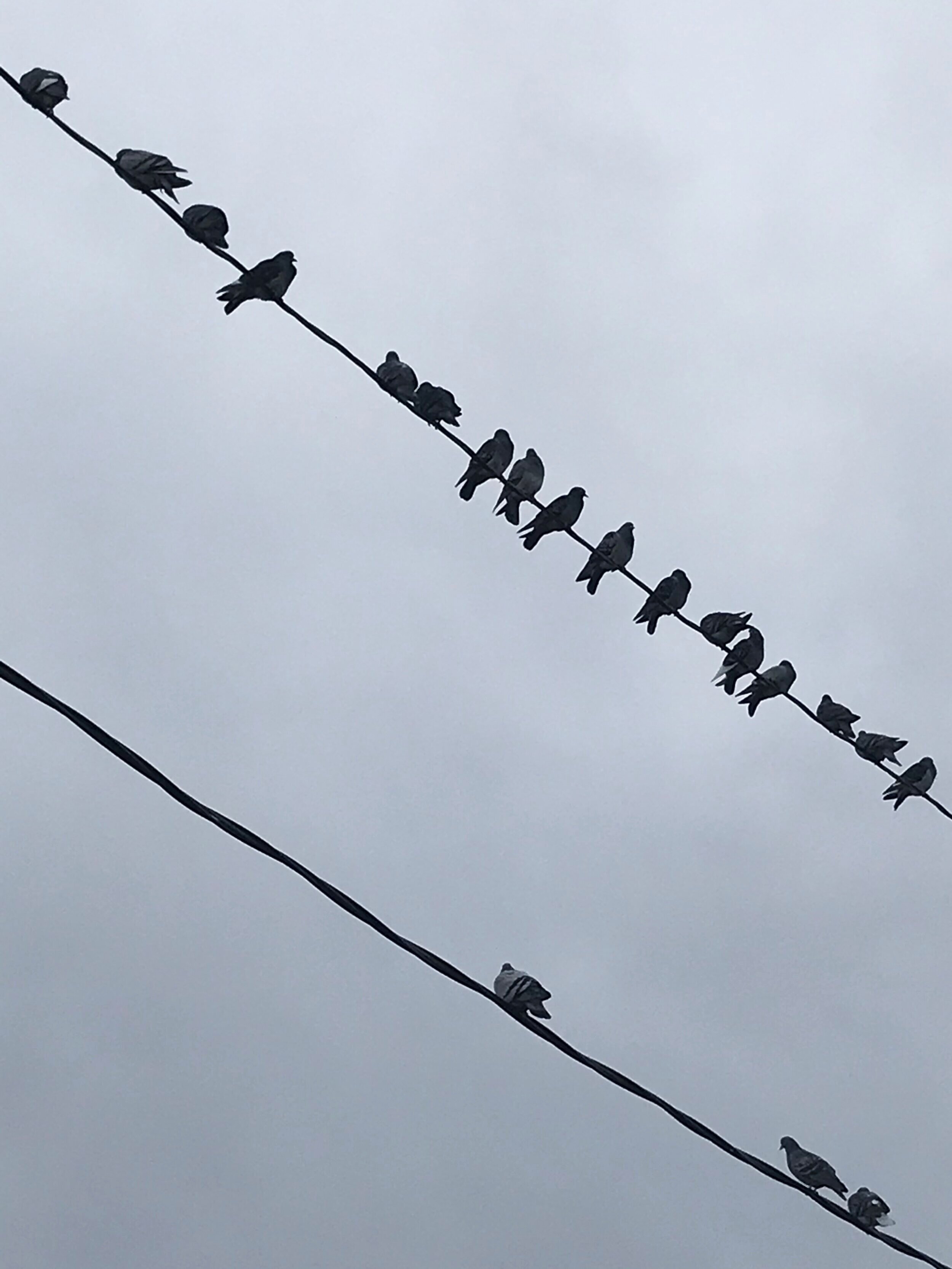
Perspective taking
self-reliant or alone
how we view the world

easing back to work
heart is full, scale is lying
wabi sabi day
New Day, New Year, New Decade, Old You, New You…the new year is often filled with anticipation of change. How will this year be different, do we really want it to be so? For me writing haiku moves me gently into noticing and observing in new ways…January 1 is the perfect time for me to challenge myself in this way. For the past several years I have hosted a Haiku Challenge as a way to jump start mindfulness in the new year. I consider haiku morsels of mindfulness…delicious in their simplicity and awareness of the present moment. You do not need to consider yourself a poet to create haiku…and you don’t even need to follow the formula you probably learned in elementary school — three lines made up of 5 syllables, 7 syllables, 5 syllables. Modern haiku do not need the formal structure that we are familiar with, but certainly can be written in this pattern. They do need to be written in the present tense as an observation that evokes awareness, thought or emotion. I love the description I once read…”a haiku is a poem that can be said in one breath”.
Come play in the haiku sandbox this January with like-minded folks! I will be writing one haiku a day for the month of January and posting them on my blog (StressResources.com/blog) Facebook (StressResources) Twitter (@pamressler) and Instagram (@StressResources) using the hashtags #HaikuChallenge20. Feel free to join in each day or only occasionally…be sure to share the hashtag #HaikuChallenge20 with friends…and let’s get writing!
Here is today’s first haiku of the new year #haikuchallenge20
First day of new year
letting go while holding on
push, pull of old, new

A sure sign of Fall…students wearing brightly colored backpacks. While these backpacks may look like the backpacks we remember carrying, many not only hold the requisite pencils and notebooks but also serve as body armor for kids. Bullet proof backpacks are one of the best selling backpacks this fall. In colors like bubblegum pink and teal, they are no longer the bailiwick of survivalists or militia-focused fringe groups. These bulletproof backpacks are being purchased by parents by the thousands fearful for the safety of their children as they send them off to school. As understandable as this fear is, I can’t help but wonder what message we are sending by outfitting children as young as five years old with bulletproof backpacks? Will our best intentions to keep our children safe actually have the unintended consequences? Research tells us yes. Anything that increases their fear and anxiety may hinder the development of their resilience when difficult times come again in their lives.
Resilience is defined as an ability to recover from or adjust to adversity or change. One sign of stress is a heightened reaction to fear. This amplified reaction decreases the ability to see choices or options in situations and the ability to develop resilience.
A parent of a first grader recently told me the story of her daughter riding the school bus for the first time. After watching her daughter tentatively getting on the bus, the mom spent the day fearful that her daughter had been upset and anxious about this new experience all day at school. However much to her surprise when the bus arrived back home, the jubilant first grader hopped off the bus and proudly said “Mom! I did it I rode the bus by myself…I was really scared but I did it”. One of the characteristics of resilient or stress hardy people is their ability to work with fear differently. They experience fear, but also understand that they are not alone in feeling this emotion and feel a sense of challenge. This is responsive fear and it can connect us with others by recognizing our shared experience. Reactive fear isolates and separates us from community. How do we help children shift from being more responsive and less reactive when considering how they deal with fear? Here are some simple ways to begin:
Develop routines — Kids and adults under stress respond positively to knowing what to expect. Establishing weekday rituals at an early age will allow children to anticipate and feel a sense of security and internal control. Routines can be also foster a sense of connection and community with others involved with the same routine—at home and at school. Post a simple calendar and involve your child in adding to it or establish a daily check in asking, “What made you laugh, scared, grateful…”
Help others — Responsive fear can be a driver of community and connection. Fred Rogers once said, “When I was a boy and I saw scary things in the news, my mother would say to me, ‘Look for the helpers, you will always find people who are helping’.” As you look for the helpers, also be one of the helpers. Resilience is built by navigating challenging situations. Finding ways to control a situation by being a helper is powerful for children and adults. How can you and your child help others in a tangible way? Volunteer with your child at a food pantry. Plant bulbs to bloom in spring – a sure sign of resilience. Provide pet food, towels and toys at an animal shelter.
Tell, read and listen to stories of resilience together— Sharing stories of adversity, fear, courage, failure and successes are part of many cultures. Storytelling is a way of passing on skills of resilience to the next generation. What stories can you tell of a time you met with adversity? Consider books that have small, or unlikely heroes that persevere through adversity, such as The Little Engine that Could for younger children, or series such as Redwall by Brian Jacques for tweens.
As we begin a new school year, let’s acknowledge our very real fear for our children’s safety, but instead of equipping our children with bulletproof backpacks, let’s work toward increasing and supporting resilience in our kids and ourselves.

All slightly different
community in each blossom
blending together

Each summer I return, as I have for decades, to a special place in northern Michigan. While our cast of family and friends expands and contracts each year, there are rituals that remain constant. One of the favorites is hunting for ubiquitous yet elusive Petoskey stones along the beaches of Lake Charlevoix and Lake Michigan. While Petoskey stones are common in this area they are also difficult to spot, unless one truly observes closely and carefully what is at one's feet. You can't rush the hunt, you can't predict where or when you will find a Petoskey stone hidden in plain sight. Surrendering to the moment, releasing expectations, cultivating curiosity and practicing patience are the secret ingredients to success in discovering a coveted Petoskey stone. What is right beneath our feet often remains undiscovered until we observe closely. Sounds a lot like mindfulness practice doesn't it? How do you cultivate mindfulness in your everyday life and in your special places?
Daily walks are treasure hunts for me. I walk the same route as I drive each day, yet I see so much more from my walking perspective than I do through the windshield. These are treasure hunts with a twist… I am not specifically hunting for a specific object, but for bits of beauty, treasures, that have gone unrecognized, unnoticed in the day to day of getting from point A to point B. Early spring is one of my favorite times to go treasure hunting, I am never disappointed and always in awe of the bits of beauty that become visible before my eyes.

hunting for treasure
visible, invisible
game of hide and seek

I am embracing a new word (at least for me)…Pyt . What a magical Danish word that immediately defuses and de-stresses annoyances and inconveniences. While the Danes haven’t cornered the market on de-stressing they are considered one of the happiest nations and have shared the concept of “hygge” with the rest of the world (click here to read my post from 2017 on hygge). The word pyt, while not having a direct translation to English, reflects the art of letting go of things out of our control and helps us refocus our energy in the present moment. A reminder to be return to mindfulness amidst annoyance, frustration or stress. Pyt is such a popular word/concept in Denmark, that it was chosen as the nation’s favorite word in a competition held by the Danish Library Association in 2018. Karen Rosinger in her article What to do When Hygge No Longer Works describes pyt in this way: “Pyt’ is used to express that you accept a situation is out of your control, and even though you might be annoyed or frustrated, you decide not to waste unnecessary energy on thinking more about it. You accept it and move on. ‘Pyt’ is also used to comfort other people and diffuse unfortunate situations.”
Pyt buttons are used in Danish schools to help students reset and refocus after an annoyance. You can even purchase your own “Pyt” button for your desk, similar to the ubiquitous Staples “Easy” button of a few years back. We all need a little more pyt in our lives, to help us be a bit more compassionate and forgiving with ourselves and others. Let’s embrace this magical word.