Finding Meaning in the Face of Mortality

I recently read an interesting article in the Wall Street Journal by Melissa Beck: A New View, After Diagnosis, highlighting a program on "meaning-making" at Memorial Sloan-Kettering for advanced stage cancer patients. The program is based on the seminal work of Viktor Frankl, Man's Search for Meaning, in which he suggests that people can endure any suffering if they know their life has meaning. Dr. William Breithart, who developed the program known as meaning-centered psychotherapy, explains that through the program participants are guided to "reconnect with many sources of meaning in life -- love, work, history, family relationships, and teaches them that when cancer produces an obstacle in one, they can find in one, they can find meaning in another". Results of a pilot study comparing "meaning-making" groups compared to traditional cancer support groups were encouraging in respect to decreased anxiety and increased spiritual well-being.
You don't need to have cancer to benefit from the exercise of reflecting on what is most meaningful in your life. We are generally too mindless and busy to notice! But it is never too late to stop, take a breath, and reflect on what we love.

Empathy vs Emotional Reasoning

Is there a difference between empathy and emotional reasoning? Michael LaFerney, PhD, PMHCNS-BC, believes that healthcare professionals often confuse the two, and this can often hinder or derail patient-provider communication. In the current edition of Advance for Nurses, Dr. LaFerney defines empathy "as the ability to understand another person's circumstances, point of view, thoughts and feelings." He goes on to explain that, "Empathy involves communication. Trying to understand what another person is experiencing without communication leads to interpretation without meaning. It becomes a mechanism of internal thought processes rather than an understanding of another's point of view or feelings." Dr. LaFerney describes emotional reasoning as "mind reading" on the part of the healthcare professional; unconsciously inferring one's own feelings, anxiety, or needs to the patient. Emotional reasoning is a lot faster for harried physicians and nurses than empathetic communication, because it does not require slowing down and taking time to truly listen to the patient. But as Dr. LaFerney points out it often leads to misdiagnosis and disconnection from the patient's needs, fears, or desires. The bottom line is MORE COMMUNICATION LEADS TO QUALITY HEALTHCARE.
What are your thoughts on empathy vs. emotional reasoning?

Medicine in the Age of Twitter

Dr. Pauline Chen poses an interesting question in her NY Times article, Medicine in the Age of Twitter: Does online social media help or hinder patient-provider communication? If you haven't heard about Twitter, it is a new social media platform that allows users to communicate via short, 140 characters or less, "tweets" to other users. I am intrigued about the possibilities of connection, but am wary of the lack of human touch. What do you think?

Letting the Patient Call the Shots

Today's New York Times has an interesting article written by Dr. Pauline Chen exploring what we, in the healthcare system, really mean by "patient centered care". Does the definition of patient centered care shift if we are in the role of patient or healthcare professional? In the article, Letting the Patient Call the Shots, Dr. Donald Berwick, president of the Institute for Healthcare Improvement in Cambridge, Massachusetts, suggests that, “ We would all be far better off if we professionals recalibrated our work such that we behaved with patients and families not as hosts in the care system, but as guests in their lives.” Radical changes in our healthcare system will need to occur to allow this to happen, are we ready for such changes? What do you think?

Perfectly Happy?

Cognitive scientists who have conducted research on happiness have found that we are not very good at predicting what will make us happy. Ironically, chronic pain, constant noise can decrease our happiness dramatically and winning the lottery or achieving a life long wish often do not substantially increase our overall happiness. A recent Boston Globe article, Perfectly Happy, explores "happiness research" and its role in guiding priorities for social and health policy.

What do you think?

Quality of Life

Thank you to those of you who alerted me to a wonderful documentary series which aired on WBUR in Boston last week. It is beautifully written and produced, an informative view of the dilemma over end of life care in this country. The title of the documentary is Quality of Death, End of Life Care in America: Inside-Out. As I listened to the documentary I felt a more appropriate title might be Quality of Life instead of Quality of Death because even as patients, families and healthcare providers prepare for death, life continues. Perhaps our emphasis on what we DON'T want done at the end of life overshadows what we DO want done? I read an interesting article recently that proposed changing the terminology of D.N.R. (Do Not Resuscitate) to A.N.D. (Allow Natural Death). Is there is a difference in your mind between these two statements, or do you feel it is only semantics? This is difficult topic to wrestle with but one that is growing in prominence in the health care world as we confront a rapidly aging population as well as staggering healthcare costs.

Healing Music in the Neonatal Intensive Care Unit

Sometimes healing comes through low-tech interventions in high-tech medical environments. That thought resonated with me when I came across an article in the McAllen Chronicle, describing the work of Dr. Anatoliy Ilizarov, the medical director of the Neonatal Intensive Care Unit (NICU) at Mission Regional Medical Center in Mission, Texas. As you can imagine, stress is rampant in a NICU, for staff, families and the tiny, fragile patients. Dr. Ilizarov, a trained classical pianist, began streaming music into the NICU to help reduce stress, and discovered that the premature infants began to gain weight faster, and began to feed earlier. Staff and families felt more relaxed as well. Dr. Ilizarov theorizes that the beat of the music, between 60-80 beats per minute, mimics the mother's heartbeat while the infant is in the womb. I was struck by the simple beauty of this intervention, a doctor who is a pianist using his gifts of art and science to heal gently. Good work, Dr. Ilizarov!

Stress So Bad It Hurts

An article caught my eye in today's Wall Street Journal..."Stress So Bad It Hurts -- Really" by Melinda Beck. The article presents a patient's perspective on being told that chronic physical pain is caused by stress and it is "all in your head". Without further explanation, the patient feels indignant and angry that the health care provider does not believe their pain is "real". The medical community is slowly becoming more comfortable with the notion that psychological stress can exacerbate and even produce physical pain in individuals. Yet, we currently do not have a health care system that is set up to be multidisciplinary in response to chronic pain. There are initiatives going on around the country that begin to address multidisciplinary ways of dealing with complex pain issues. I am currently involved in graduate work at Tufts University School of Medicine's Pain Research, Education and Policy Program, the only one of its kind in the United States. As an initiative to share information and dialogue about pain management, we have started a blog (http://www.go.tufts.edu/pain) on the complex subject of pain research, education and policy and would welcome your voice. I hope that as President Obama considers health care reform, we as health care providers and consumers take on a vocal role of advocating for a multidisciplinary approach to true "health" care and not procedure oriented "illness" care. Only when we begin to acknowledge the innate connection between the body, mind and spirit will we truly begin to understand the complexities of the human body.


I would love to hear your thoughts!

Wellness Care Moves onto the Radar


The Institute of Medicine has taken a step in the right direction by beginning to advocate for putting integrative medicine on Congress's radar this year. With a new focus on health care dollars and economic use of limited funds, it only makes sense to begin to look outside standard disease based care and at more integrative models of good health care. "Health is more than the absence of disease", said Dr. Ralph Snyderman who is heading up a three day meeting of the Institute of Medicine on the topic of wellness and integrative care.


Kudos to the Institute of Medicine for beginning to view the many aspects of quality, health care as more than just a disease based model. Read the Boston Globe article "Doctors Move Wellness Care onto the Radar" on this topic.


I would love to hear your ideas about how we can create a new model for quality health care in our country.


Become a CMO...Chief Motivating Officer

Motivate Like a CEO...I love the title of the book that came across my desk recently, written by my colleague Suzanne Bates, but I was a bit skeptical as how this book would be relevant to folks outside of the corner office. However, as soon as I began to read Motivate Like a CEO, I realized that Suzanne's message is universal to anyone who needs to communicate and motivate a team to be more effective, productive, and creative. Communicating a strong sense of purpose, connection and shared goals creates an environment for inviting change and growth; qualities necessary in education, health care, business, politics, and life. For those in health care, think of how helpful it would be to be a more effective motivator and communicator with patients and families; helping to change behavior and lifestyle. For those in education, imagine the positive impact of inspiring students to work toward common goals. The opportunities to use these strategies are numerous and extend much farther than the traditional corner office. Motivate Like a CEO is clearly written and filled with strategies for becoming a CMO...Chief Motivating Officer. A must read for any leader or potential leader!


On Monday, January 26, Suzanne Bates and a number of experts and authors in the fields of business, communication, consulting, stress management, health care, and education will come together to offer special bonus gifts to those of you who purchase Motivate Like a CEO on that day. Stress Resources is pleased to be the stress management firm selected to offer a valuable bonus to book purchasers. What a great way to add an invaluable book, Motivate Like a CEO, to your business library, and also take advantage of a myriad of complimentary bonus gifts from noted experts. To find out more about this one day offer, click here: http://www.bates-communications.com/motivate-bonusoffer.php

Let's Get to Work

Today I joined with millions of others from around the block and around the world to witness an amazing moment of hope; of picking ourselves back up, dusting ourselves off, and beginning again the remaking of America. President Obama has set before us this challenge...will we accept it? I know I am up for the opportunity to help redefine our collective vision. Will you join me in making a difference? My good friend and colleague Dr. Harvey Zarren, president of the Integrative Medicine Alliance beautifully articulated what so many of us felt today. With Harvey's permission, I share with you his words:

"Know that now a torch has been passed, turning away from fear and into
hope, turning away from coercion and into invitation, turning away from
insulation and into brotherhood, and turning away from the oppression of
privilege and into the responsibility and possibility of
humankind.

The question is raised and the challenge has been
offered: can we, each of us, starting within ourselves and then in all our
relationships and all our positions, can we carry that vision forward with
courage and curiosity, persistence and humility, love and the conviction of all
possibilities?

Let's continue working at the new vision with all
the capabilities and all the energy that we possess and of which we can
conceive."

Thank you, President Obama, thank you, Harvey...now, let's get to work!

New Year...New Possibilities


"Now let us welcome the New Year,
Full of things that have never been."
Rainer Maria Rilke

Welcome to the new year, a year of new possibilities. Thank you to Pat T., who reminded me of the above quotation as the old year passed and the new year was born. As we in the north bundle ourselves under many outer layers, perhaps this can also be a time of examining the inner layers of our lives and exploring this new place of opportunity, of freshness, that exists in 2009. Inertia is easy, unfolding into new ways of being is challenging...I wish you a new year of challenging exploration!

E Pluribus Unum

As is our annual tradition in our Concord, Massachusetts neighborhood...we gathered together, assembled and lit 1200 candles to glow into the winter night. As each family lit the candles in front of their house, the individual small flickering flames joined together in the cold winter darkness as one cohesive glow illuminating the neighborhood. This tradition seemed especially appropriate and poignant this year, as we, together, face challenges and new beginnings in our country and world...e pluribus unum...out of many, one.


The Hero's Journey

We are all on a hero's journey...a metaphor for our lives. At the recent Massachusetts Conference for Women, I became acquainted with a beautiful poem, Ithaca by Constantine Cavafy, which conveys the hero's journey in prose. How often are we only on a quest for Ithaca, the Holy Grail, Nirvana...you get the picture...goal driven without respect to the wisdom we gain along the way? May your journey be long and adventurous on your way to your Ithaca.

Ithaca (by Constantine Cavafy)
When you set out on your journey to Ithaca,
pray that the road is long,
full of adventure, full of knowledge.
The Lestrygonians and the Cyclops,
the angry Poseidon -- do not fear them:
You will never find such as these on your path,
if your thoughts remain lofty, if a fine
emotion touches your spirit and your body.
The Lestrygonians and the Cyclops,
the fierce Poseidon you will never encounter,
if you do not carry them within your soul,
if your soul does not set them up before you.

Pray that the road is long.
That the summer mornings are many,
when,with such pleasure, with such joy
you will enter ports seen for the first time;
stop at Phoenician markets,
and purchase fine merchandise,
mother-of-pearl and coral, amber, and ebony,
and sensual perfumes of all kinds,
as many sensual perfumes as you can;
visit many Egyptian cities,
to learn and learn from scholars.

Always keep Ithaca on your mind.
To arrive there is your ultimate goal.
But do not hurry the voyage at all.
It is better to let it last for many years;
and to anchor at the island when you are old,
rich with all you have gained on the way,
not expecting that Ithaca will offer you riches.

Ithaca has given you the beautiful voyage.
Without her you would have never set out on the road.
She has nothing more to give you.

And if you find her poor, Ithaca has not deceived you.
Wise as you have become, with so much experience,
you must already have understood what these Ithacas mean.


I would love to hear your comments on how this poem speaks to you and your hero's journey.

Massachusetts Conference for Women

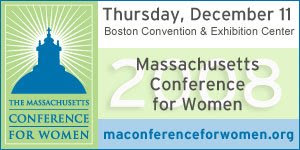
I was honored to be one of nearly 5,000 women filling the halls of the Boston Convention Center today for the fourth annual Massachusetts Conference for Women, featuring more than 85 speakers, including headliners Lesley Stahl of CBS 60 Minutes, columnist Liz Smith (who, by the way, is 85 years old and still going strong), publisher Joni Evans, columnist Judith Martin (Miss Manners) speaking about their new joint venture, wowOwow.com, Holly Robinson Peete and Marianne Williamson. The Conference’s theme, “The Next Chapter of You,” was highlighted throughout the day encouraging attendees to invest in themselves and give back to their communities.

Jessie M. Gaeta, M.D. was honored with the Conference’s Be the Change Award. The award recognizes a woman who rises above and beyond in the realm of service by shining light on an unmet need in her community. Dr. Gaeta dedicates her life to caring for the homeless. As a practicing internist at Boston University Medical Center and Boston Health Care for the Homeless Program, she treats homeless patients on the streets and in shelters. Dr. Gaeta also leads policy advocacy at the Massachusetts Housing and Shelter Alliance. By raising awareness of the public health implications of homelessness and the cost-effectiveness of a Housing First approach, she has successfully influenced lawmakers to create social change through the institution of new approaches to ending homelessness.

Click here for photos of the 2008 Massachusetts Conference for Women

I attended some amazing breakout sessions with speakers, Ariane deBonvoisin, Abby Seixas, and Marilyn Paul, whose strategies of change, self-care and organization of the inner and outer aspects of our lives expanded on Marianne Williamson's keynote statement: "The only antidote to the chaos is a deeper way of living".

The fifth annual Massachusetts Conference for Women is slated for Dec. 10, 2008 at the Boston Convention & Exhibition Center. I am planning on attending again, and would love to have some of you join me!

Did you attend the conference this year? I would love to hear your comments...what were the take home messages that resonated with you?

Engage with Grace

Thanksgiving is a time we traditionally gather together with family and friends to express our gratitude for being able to share food and companionship with one another. It can also be a wonderful opportunity to share with loved ones our most personal wishes for what we hold important to us at the end of life if we were unable to speak for ourselves. I was pleased to be invited to play a part in spreading the word on the Engage with Grace: One Slide Project by Paul Levy, CEO and president of Beth Israel Deaconess Medical Center in Boston. The goal is to begin this important conversation with loved ones before the need arises, so you can best carry out their wishes and choices if they cannot speak for themselves. From Nov 26-Nov 30, health bloggers across the globe will be sending out the same message to their readers, hoping that we can help you find the words to begin this compassionate conversation with your friends and family.

We make choices throughout our lives - where we want to live, what types of activities will fill our days, with whom we spend our time. These choices are often a balance between our desires and our means, but at the end of the day, they are decisions made with intent. But when it comes to how we want to be treated at the end our lives, often we don't express our intent or tell our loved ones about it.

This has real consequences. 73% of Americans would prefer to die at home, but up to 50% die in hospital. More than 80% of Californians say their loved ones “know exactly” or have a “good idea” of what their wishes would be if they were in a persistent coma, but only 50% say they've talked to them about their preferences.

But our end of life experiences are about a lot more than statistics. They’re about all of us. So the first thing we need to do is start talking.

Engage With Grace: The One Slide Project was designed with one simple goal: to help get the conversation about end of life experience started. The idea is simple: Create a tool to help get people talking. One Slide, with just five questions on it. Five questions designed to help get us talking with each other, with our loved ones, about our preferences. And we’re asking people to share this One Slide – wherever and whenever they can…at a presentation, at dinner, at their book club. Just One Slide, just five questions.

Lets start a global discussion that, until now, most of us haven’t had.

Here is what we are asking you: Download The One Slide and share it at any opportunity – with colleagues, family, friends. Think of the slide as currency and donate just two minutes whenever you can. Commit to being able to answer these five questions about end of life experience for yourself, and for your loved ones. Then commit to helping others do the same. Get this conversation started.

Let's start a viral movement driven by the change we as individuals can effect...and the incredibly positive impact we could have collectively. Help ensure that all of us - and the people we care for - can end our lives in the same purposeful way we live them.

Just One Slide, just one goal. Think of the enormous difference we can make together.

(To learn more please go to www.engagewithgrace.org. This post was written by Alexandra Drane and the Engage With Grace team)

Happy Thanksgiving and may your Thanksgiving table be filled with companionship, compassion and conversation.

Putting the Patient First

As much as I believe we currently have a very broken system of health care in this country that is in urgent need of healing; when I see an organization that is doing right by the patient and families it serves, I readily applaud their success. Such is the case with Beth Israel Deaconess Medical Center (BIDMC) in Boston. While not part of the mega-Partners Healthcare group in the Boston area, they have been an institution at the fore of patient centered care, being one of the first hospitals in the country to institute primary care nursing over 30 years ago. I regularly follow the blog written by the CEO of BIDMC, Paul Levy. Through his blog, Running a Hospital, he has added transparency, humanness and compassion to the commonly hidden world of hospital administration. He has also helped to create a culture of cooperation and patient centered care among hospital staff that is truly remarkable. This culture of cooperation is evident by the following letter from a patient Paul Levy posted on his blog:

"As far as I'm concerned, you can take all those posted quality metrics and throw them out the window when you get a letter like this one that I received from a patient:

BIDMC is a special place. The nursing care deflates your stress about being
in the hospital. The doctor's talent makes you believe you have the best
possible care. The atmosphere makes you feel that people like their jobs and
feel invested in them, so you feel that everybody is paying attention, whether
they are cleaners, food service, transport, department heads, trustees.I
especially noticed the employees' investment in their jobs. (NURSE: "Doctor, I
noticed you are testing Ms. X for TB. If we believe she might have TB, should we
institute those protocols now?" TRANSPORT: "The nurses are really busy. I'll
reconnect your oxygen so you can go back to bed and I'll tell them that I did."
NURSE: Let's not wait for the bed to be changed. I want it to be dry for you
when you have these fevers." She changed the bed and me three times that
night.)Symbol of cooperation regardless of rank or function: Nobody left my room
without taking my meal tray with them.

Posted by Paul Levy at 11/20/2008 10:28:00 AM"

Wow!!!!! All I can say is kudos to Paul Levy and the staff at BIDMC for creating and maintaining a culture of cooperation and compassion and showing us that it is possible.

Road to Hope

"Hope is like a road in the country; there was never a road, but when many
people walk on it, the road comes into existence." Lin Yutang 1895-1976

As I came across this quote, I immediately thought of the monumental election on November 4 in which we have just participated. With any change there can be natural resistance and fear of the unknown, but this can also be coupled with unexpected opportunity. No matter if you aligned yourself "Blue" or "Red" during the past year, let us come together in this historic time and build a road of hope together, by walking side by side until the road comes into existence. I wish you hope, healing and gratitude during this month of Thanksgiving.

Saying OM instead of Ahh in NYC


Kudos to fashion designer Donna Karan for putting her money where her mouth is by donating $850,000 for the initiation of a pilot program on integrative therapies at the Beth Israel Medical Center in New York City. The program, highlighted in today's New York Times ,will include yoga, reflexology and aromatherapy as integral parts of a patient's treatment plan, if they wish. I am a firm believer that we can enhance our healing process if we are given options and choices in creating our own care plan, including the best that modern medicine and traditional healing practices have to offer. What a wonderful resource to have a myriad of options available to the patients at Beth Israel. I wish the pilot program much success!

Opportunity Within Crisis


barn's burnt down;
now I can see the moon

~ Masahide

I came across this poignant haiku this morning. Mizuta Masahide was a samurai in the Zeze domain of Ohmi Province. In 1688 Masahide's house was burnt down, prompting him to write his most famous haiku. The haiku seems very current and relevant to our challenging present times. Can we also see the opportunity within the crisis?